


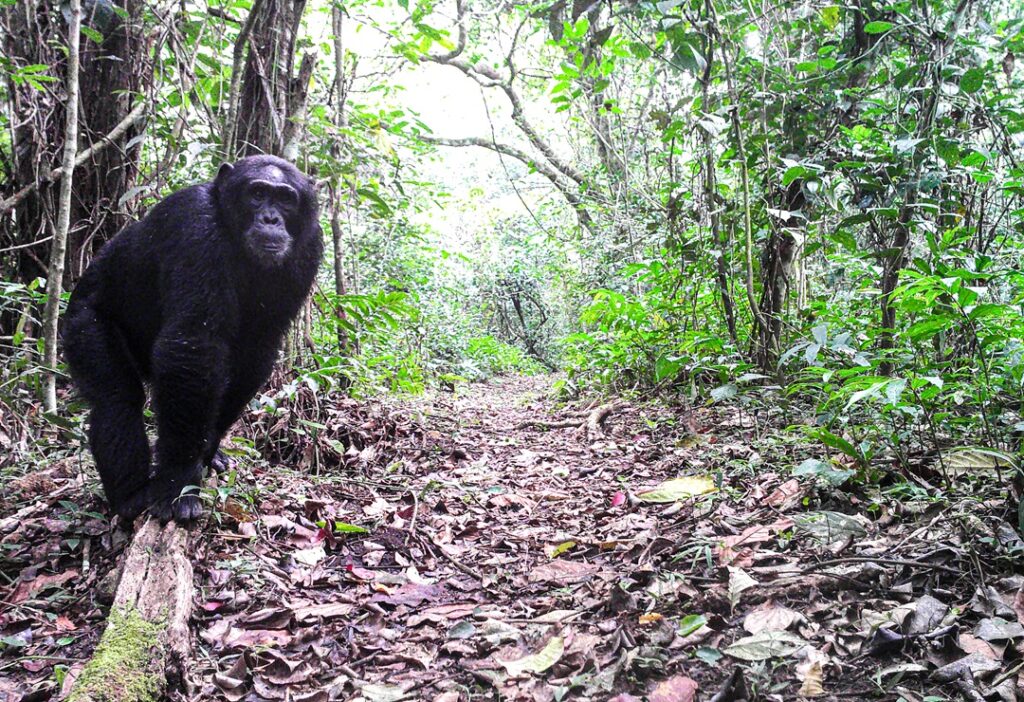
For nearly 32 years, since 1994, the Kibale Forest Restoration Project in Western Uganda has been coaxing a degraded landscape back to life.
Since planting began in earnest in 1995, the project has restored over 7150 of its 10,000-hectare target inside Kibale National Park, with the remaining hectares deliberately left untouched to let wetlands, riverine vegetation and wildlife corridors recover on their own terms.
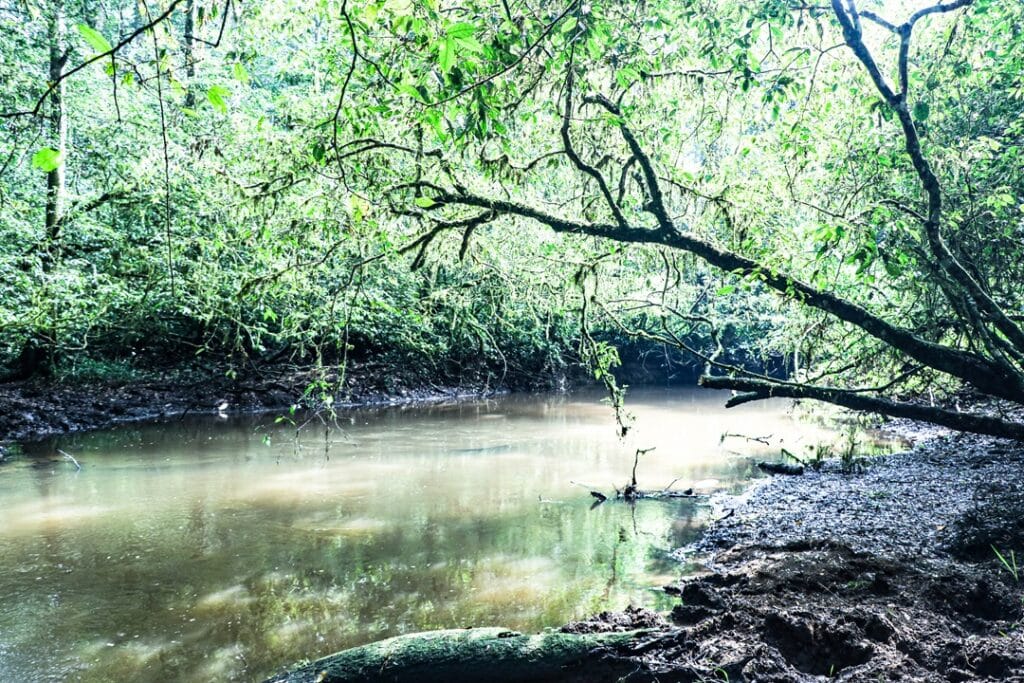
But restoring a forest is only half the story. Around its edges live thousands of smallholder farmers whose land, livelihoods and history are entangled with the park itself, and for them, the Uganda Wildlife Authority (UWA) has had to find another way forward: agroforestry.
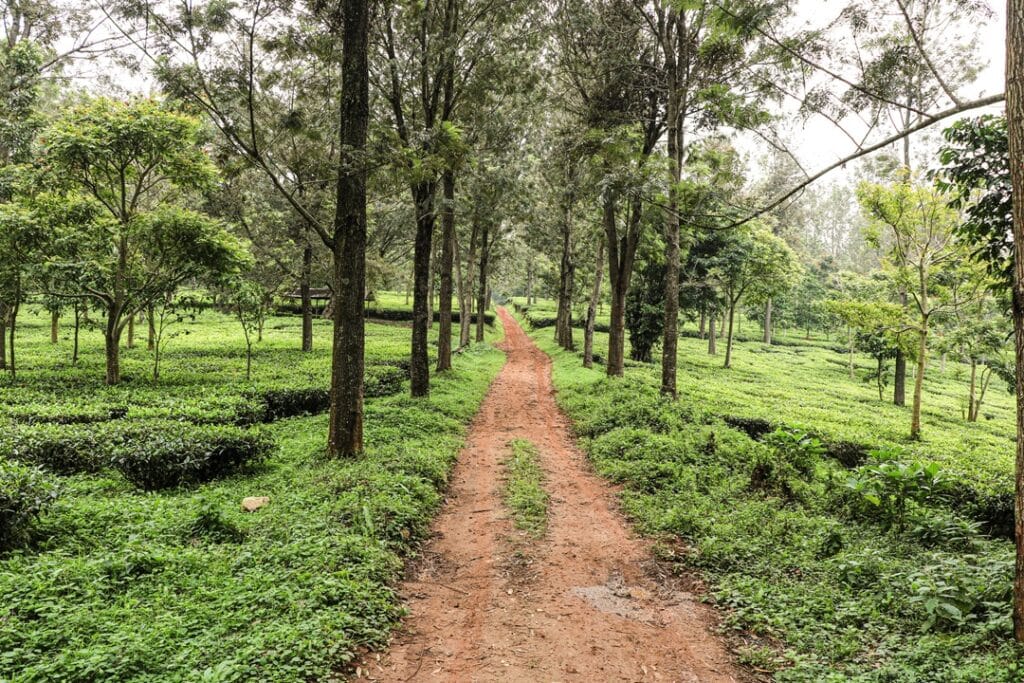
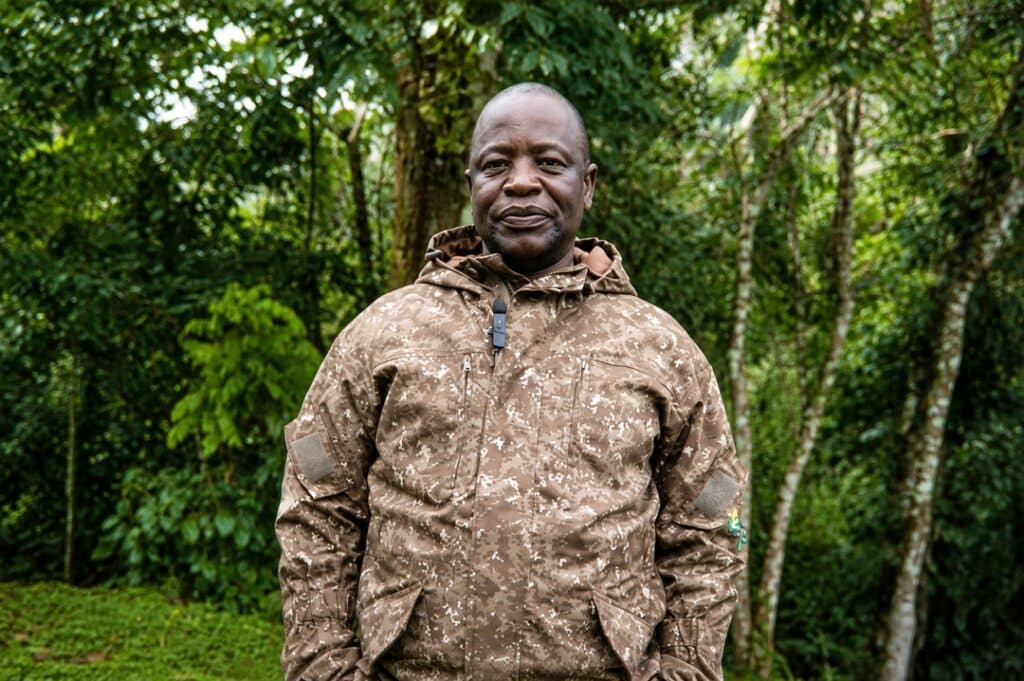
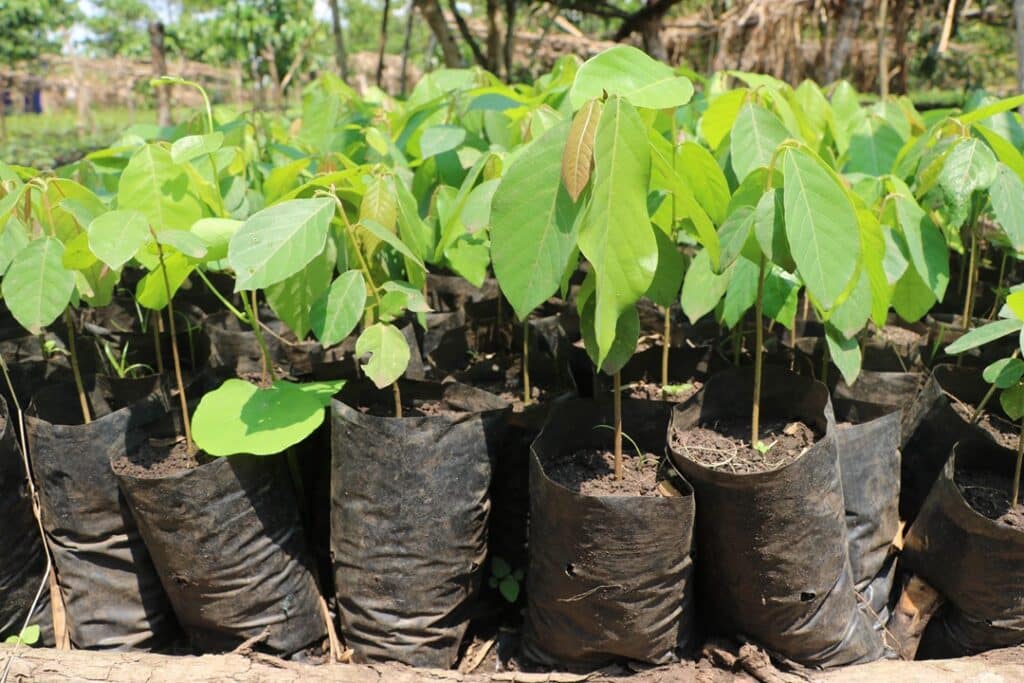
“We have also tried to demonstrate to the outside communities how it is possible to raise a natural forest,” says Richard Kigenyi, Senior Warden and Project Manager of Kibale Forest Restoration Project. “Many of them have raised trees on their land.”
Trees, not tension
The logic is deceptively simple. A park surrounded by a fast-growing population will always face demand for its resources from firewood, timber, medicine, land. Rather than treat that demand as a threat to be policed, UWA has tried to redirect it.
“One of the primary objectives of conservation is to ensure that there is benefit between UWA and the community,” Kigenyi explains. “We work hand in hand with the adjacent community so that everybody at the end of the day is happy.”
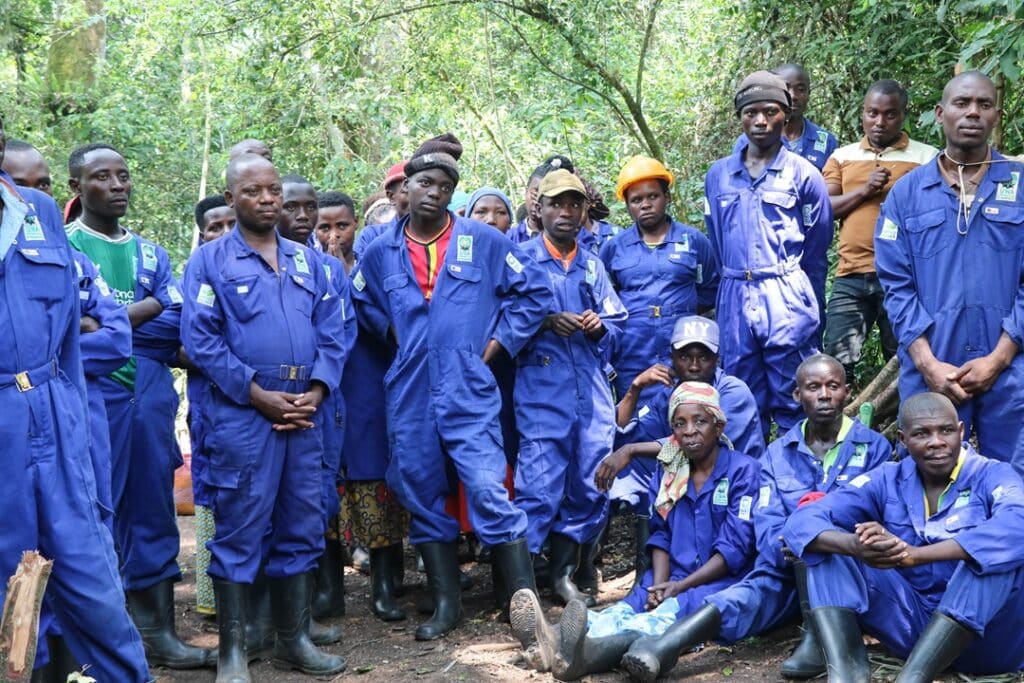
That has meant sensitisation campaigns on how communities can protect the park, and a deliberate push to get farmers growing their own wood lots and trees instead of relying on the park for supply. “We tell them to have wood lots on their farms,” Kigenyi says. “We ask them to come up with programs that will deviate their demand from the park.”
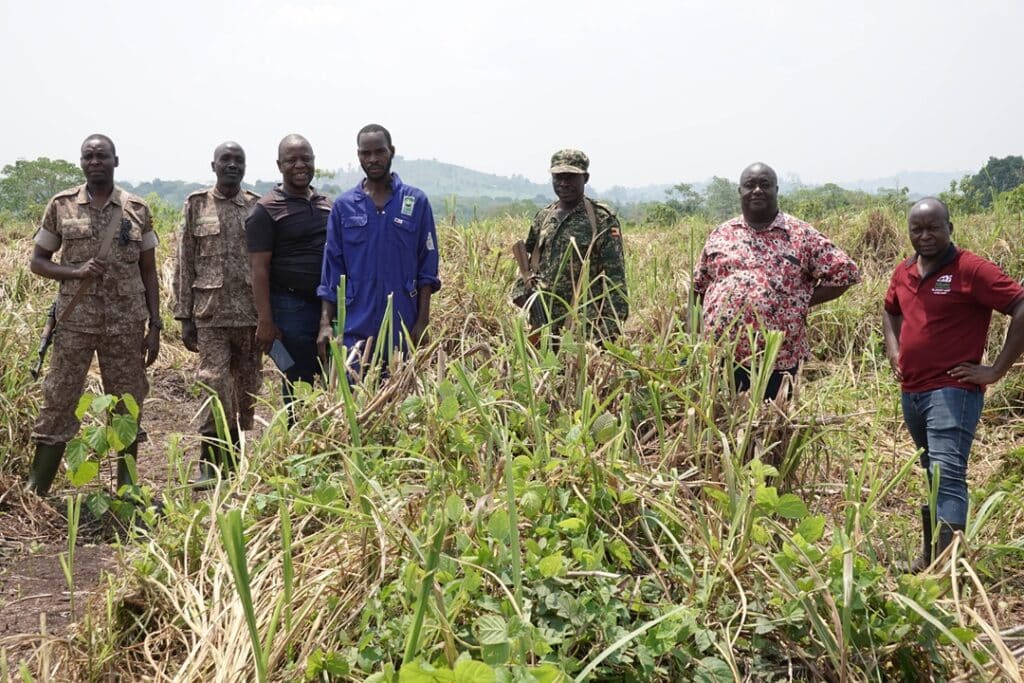
Agroforestry a smart climate farming practice refers to integrating trees directly into farmland, a land use system that has become one of the project’s central tools.
A model farm on the forest’s edge
Few illustrate the shift better than Alan Tulip, a prominent organic agriculture expert, consultant and Director of Kahangi Estate in the Toro sub-region near Fort Portal, sitting right on Kibale’s northern boundary. On his farm, tea planted as far back as the 1930s now grows alongside coffee, castor and avocado, interspersed with tree species such as Grevillea robusta and Spathodea campanulata (African tulip).
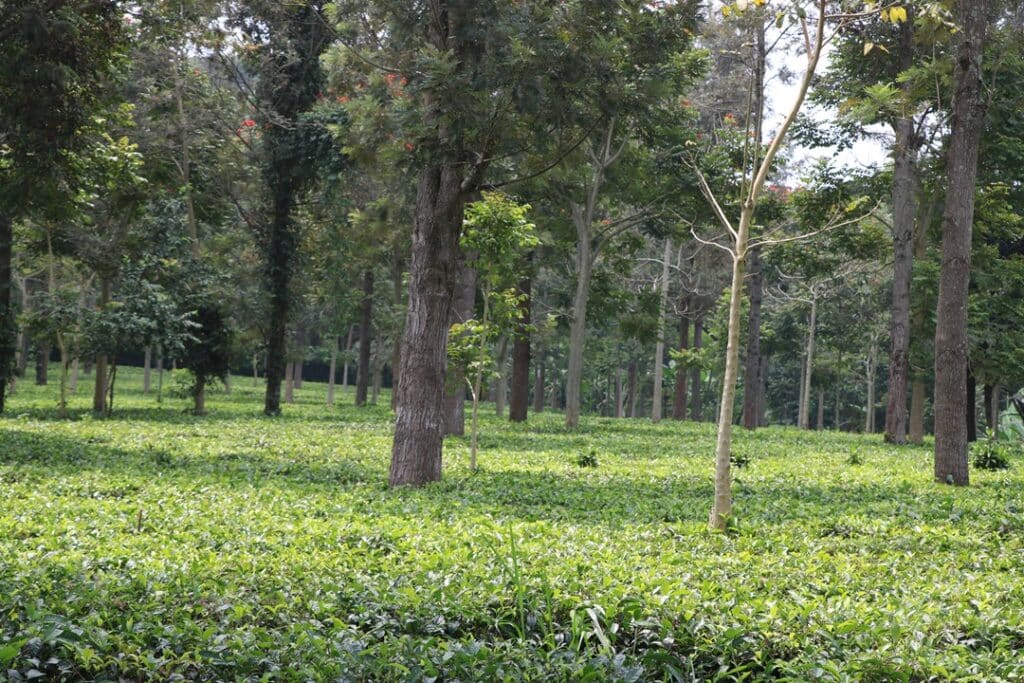
Kahangi Estate has since grown into a training ground in its own right. Its Sustainable Agriculture Training Centre teaches organic certification and sustainable farming methods, and has trained more than 800 students from Uganda, Rwanda, Congo and Tanzania.
Tulip is candid that the practice didn’t start as an environmental mission. “When I first planted trees, I just planted them out of desperation, because of all the hailstorms,” he says. “They substantially reduced wind speeds over the farm, which has also substantially reduced evapotranspiration.”
He is equally sceptical of the alternative most farmers reach for first. “There’s a whole big fuss made about irrigation, but when you look at irrigation, you basically need something the size of the Nile flowing through your farm. And it has a cost, all the cost of pumping and then all the cost of distribution.”
Trees, by contrast, pay for themselves twice over. “So, what we do from time to time is that we thin out some trees and then we sell other trees, because we’ve already got new ones growing,” Tulip says. “The trees are there partly for the environment but partly also as another income. There’s high demand for timber.”
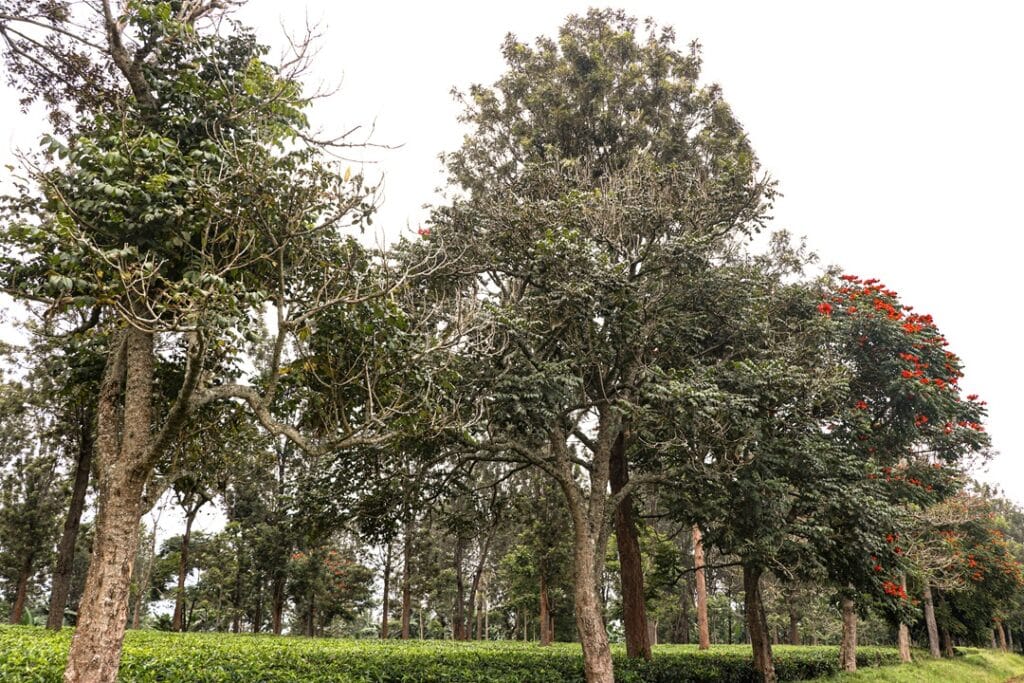
It wasn’t always an easy sell. “When I first planted trees, everybody rubbished it, whether it was small farmers or the big tea managers. ‘Oh no, you can’t plant trees with tea, they will steal the nutrients,'” he recalls. “It took about four or five years. And actually, if you look around now, the big companies don’t do it, but you’ll see nearly all the smallholders, at least 70%, are now planting trees with their tea.”
The science, he argues, backs up what farmers are seeing. “Different plants attract different microbes, and the better your soil gets, the more you increase the diversity of microbes in the soil. The more microbes you have, the quicker the decomposition.”
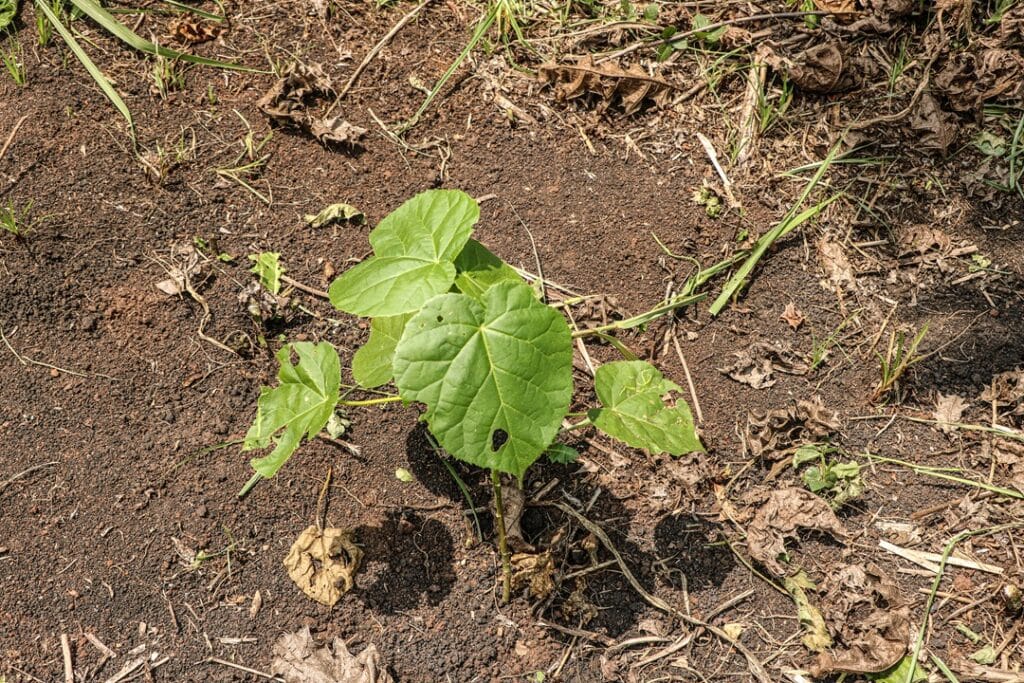
That microbial diversity does more than speed up decomposition. A richer, more varied community of soil microbes and fungi also builds a natural line of defence for crops: certain species compete with or suppress the pathogens that cause root rot, wilt and blight, while others form symbiotic relationships with plant roots that strengthen their resistance to disease.
In practice, this means the same microbial activity that breaks down organic matter faster is also the mechanism quietly protecting crops from the diseases that would otherwise cut into a harvest, one of the less visible ways agroforestry translates into higher, more reliable yields.
Tulip points to Kibale Forest National Park itself as proof of concept: “Nothing is monocropped. Plants never evolved to grow monocropped. You don’t go to a part of Kibale Forest National Park and find just one species of tree. Lots of big, different trees and all kinds of vegetation grow close to each other in harmony and they actually are able to share, develop their own rooting systems without competing with the other plants. Nature actually is able to manage by itself”.
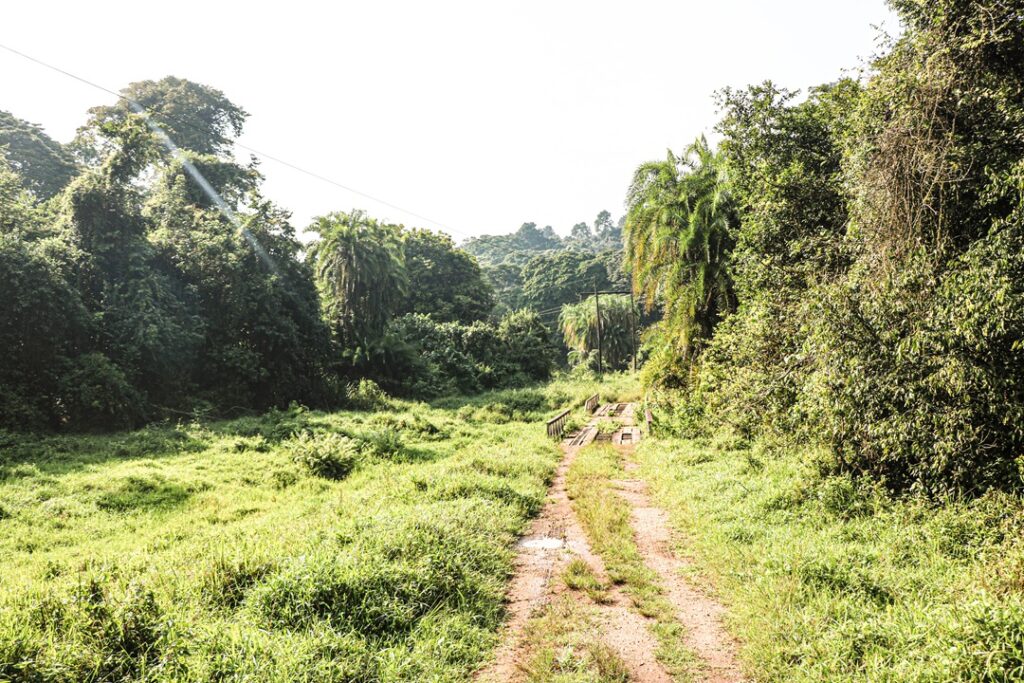
A woodlot of Grevillea grown alone, he says, “will take forever to grow”, intercropped with other plants, it grows four or five times faster, feeding off the microbial life the other species generate.
From half an acre to a demonstration plot
Down the road, Innocent Byomuhangi, a hotelier by profession and farmer by inheritance, tells a smaller but no less striking version of the same story. His half-acre plot, now a mix of coffee, banana and trees began as “a joke, as my side work from work” more than a decade ago.
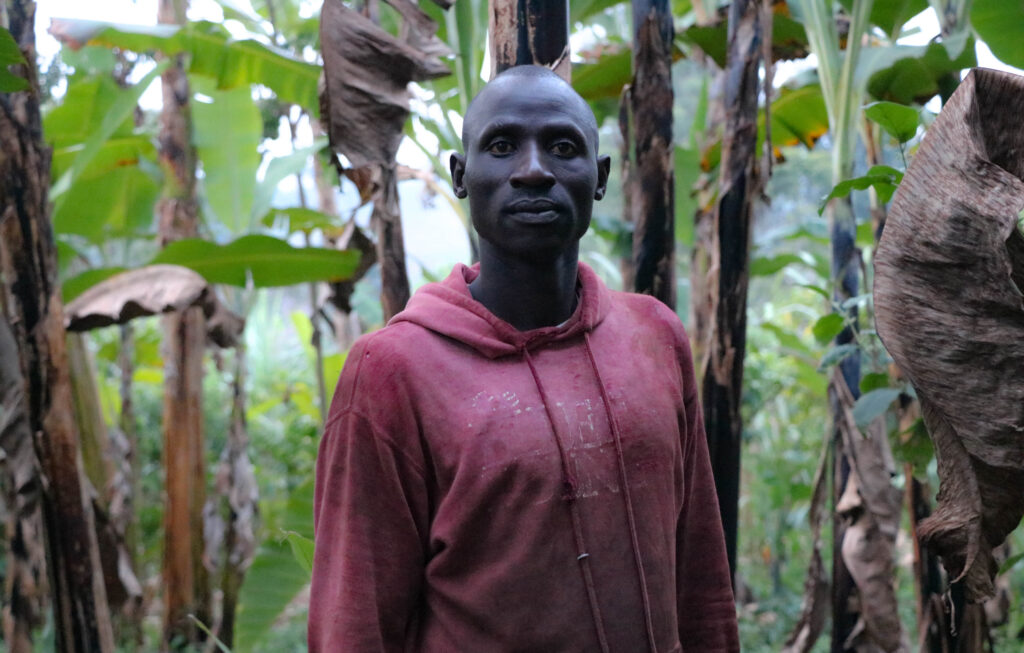
The land he inherited was nearly barren. “By the time I acquired this land, it was too infertile. I could plant their maize, beans and nothing could come out,” he says.
His first fix was mulching, “Let me put coffee and practice mulching to revive the top layer of the soil, because we believe the soil without the top layer is open to soil erosion.”
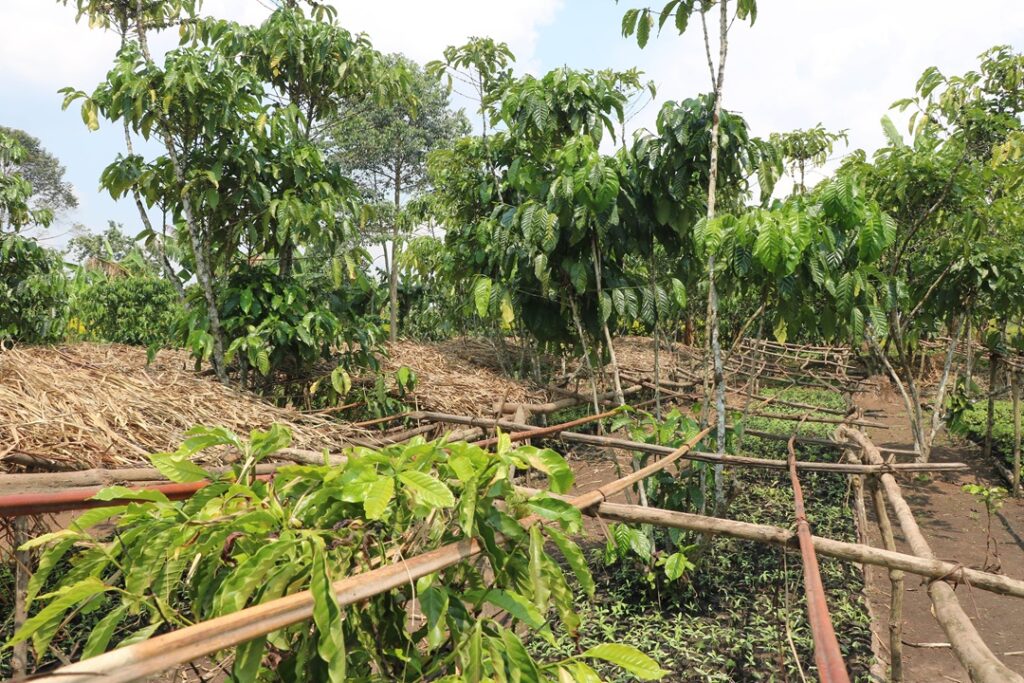
He tried slashing for nearly three years, but the topsoil kept hardening under the sun, so he turned to trees.The trees he planted along his boundaries do more than provide shade.
“By virtue of the trees that I have around, birds come around as they transfer some seeds, bringing new tree species onto my farm,” Byomuhangi says.
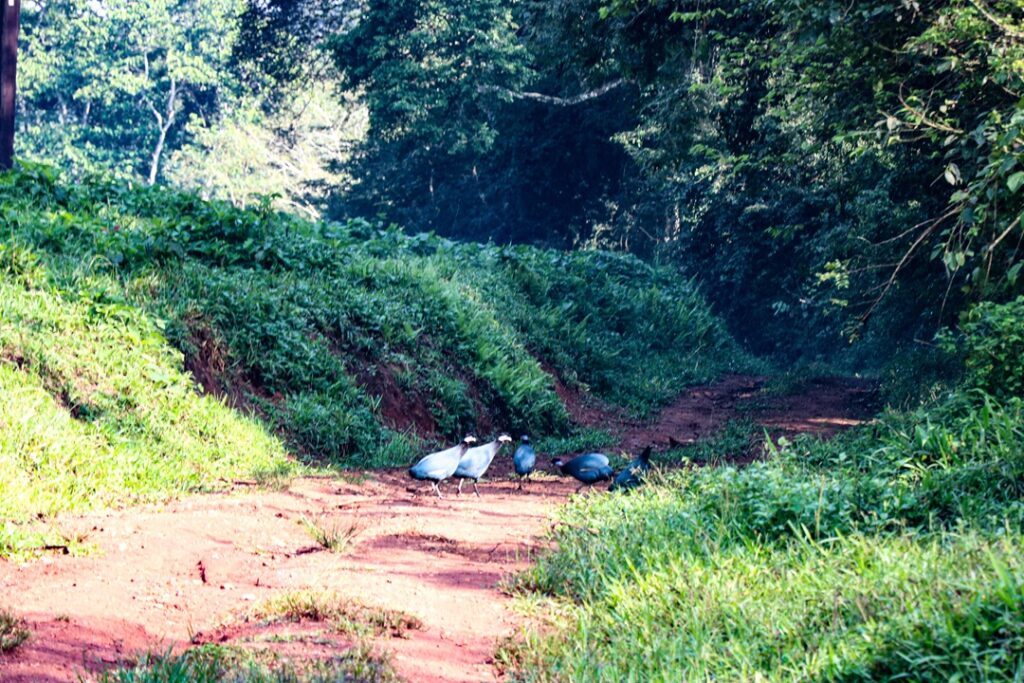
He has no need to draw firewood from the national park at all. The leaf litter mulches his land and keeps the soil moist; the trees act as windbreakers; and, he believes, they help fend off disease.
“My coffee has no diseases because other crops, the trees inclusive defend my coffee from bacteria.” His coffee also benefits from water anchored by the banana plants nearby, and the shade from the trees keeps his crops cooler and green throughout the dry spells too.
The birds and the trees attract bring more than company. “Those birds will bring different species into my farm, those are trees which I would love to be in my garden, to also get more firewood and still sell it as well for timber, and I get money.” Between healthier soil, higher yields and a second income stream from timber, Byomuhangi no longer depends on his crops alone.
He is quick to warn other farmers off species that don’t play well with others, cautioning against inter-cropping with eucalyptus and pine.
Skeptics turned converts
The pattern of doubt-then-conversion reoccurs across the community. “Other farmers who doubted my planting trees within my garden but now that they see the results on my farm, they are copying from me and practicing the same on their farms,” says Monica Asiimwe, a one farmer near Kibale Forest National Park.
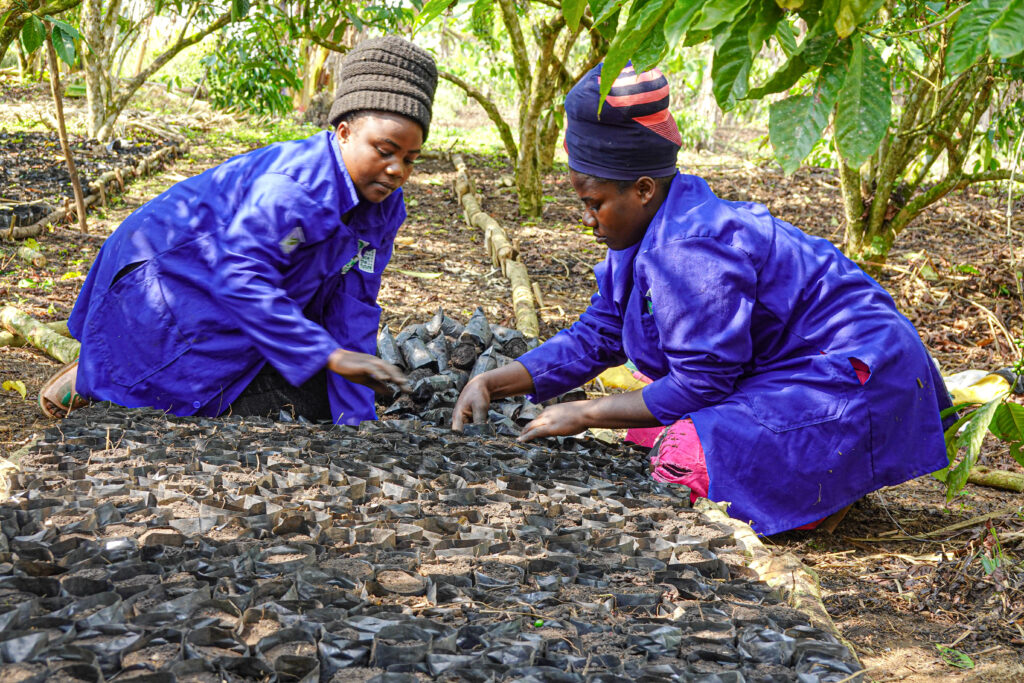
All this she notes is thanks to the agroforestry training organised by UWA and conducted by trainer Alan Tulip, under the Kibale Forest Restoration Project.
What began with 20 people has grown steadily. “We started with about 20 people, then we trained the women, and the number is multiplying,” Kigenyi, Senior Warden and Project Manager of Kibale Forest Restoration Project says. “Right now, we have over 80 farmers who have acquired these skills and in turn train other farmers in the community.”
The approach is layered onto a wider system of community governance: village-level Community Advisory Boards screen income-generating project proposals; motorcycles (locally known as boda-bodas) for young men, tailoring and tents or small maize mills for women, and beekeeping for others, before elevating them to parish-level Community Steering Committees for funding and monitoring.
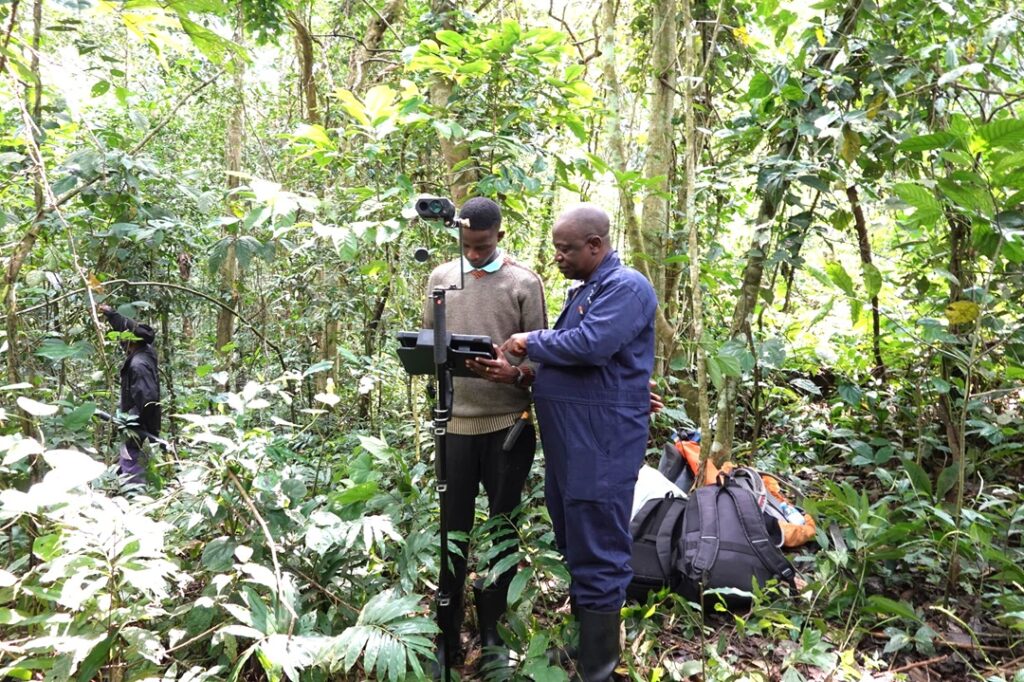
The project employs on monthly basis over 250 workers and 500 workers inside the forest itself, spanning generations of the same families. “We worked with fathers, we worked with grandfathers, we worked with grandkids,” Kigenyi, the Project Manager says. “So, in that way we are also supporting the social economy of the country.”
A global squeeze on smallholders
Kibale Forest National Park’s experiment matters beyond its own boundaries. Forests worldwide have long been under pressure from the production of cocoa, coffee, palm oil and other commodities, and Uganda’s tea- and coffee-growing communities sit squarely inside that dynamic. When the European Union passed its landmark deforestation regulation (EUDR) in 2023, it rested on a simple premise: to sell certain commodities into the European market, producers must prove those goods are not linked to deforestation or forest degradation.
As the regulation moves toward full application, it remains an open question whether it can protect forests without pushing smallholders out of the market altogether. Much of the supply chain running through small and medium exporters, local traders, cooperatives and licensed buying companies is intermediary-heavy, aggregating stock from hundreds or thousands of smallholders who often lack formal land documentation, digital records or any prior exposure to geolocation-based traceability.
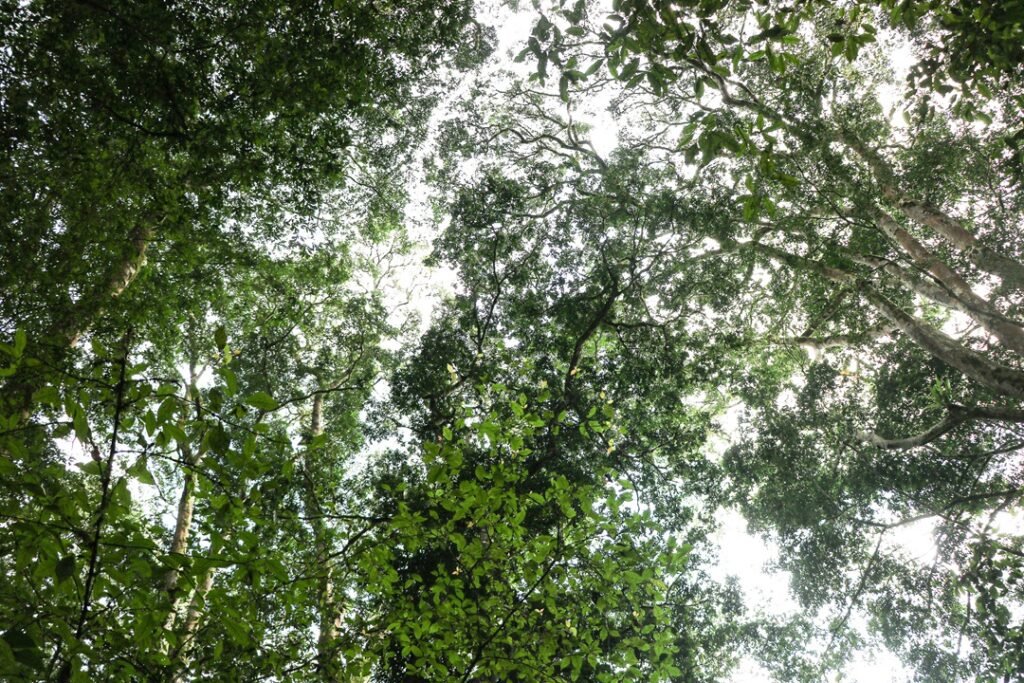
To sell into Europe now, buyers must know and prove where a commodity was grown, that it was legally sourced, and that it is not tied to new deforestation.
Faced with that compliance risk, some buyers respond by filtering out the farmers who look riskiest on paper, often those simply located near forest boundaries, even when those farmers are not contributing to deforestation at all.
Pushed into informal, less regulated markets, they make the overall supply chain more fragmented, more fragile and more exposed to shocks. The compliance costs that follow tend to travel downward, from traders to cooperatives and ultimately to the farmers themselves.
It is precisely this pressure that makes Kibale Forest National Park’s community-anchored model of documented, trained, tree-integrated farming relevant well beyond conservation circles: farmers who can demonstrate legitimate, traceable, deforestation-free land use are better placed to stay inside formal, EU-facing supply chains rather than being quietly excluded from them.
Turning restored forest into carbon finance
UWA is also working to convert Kibale’s restored hectares into a more direct financial asset: carbon credits. The park’s restoration work is backed by partners including Face the Future, a Dutch reforestation organisation, and Prima Klima, a German carbon-offset organisation, both involved in structuring the carbon finance side of the project alongside UWA.
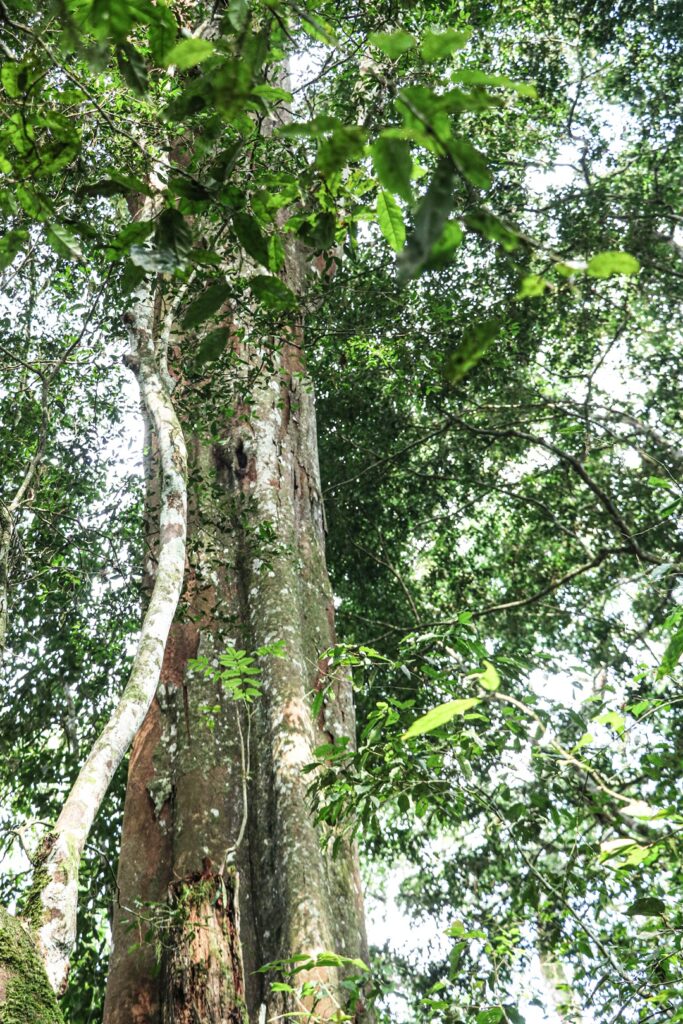
In broad terms, the mechanism works like this: as restored forest grows, it draws down and stores carbon dioxide from the atmosphere. Independent standards bodies measure and verify how much carbon a project like Kibale’s has sequestered, and that verified amount is converted into tradeable carbon credits, each representing a tonne of CO2 removed or avoided.
Companies and organisations elsewhere in the world, often looking to offset emissions they can’t yet eliminate, purchase those credits, and the revenue flows back to fund further restoration and community programming around the park.
For UWA, that financing stream is a way of formalising something the agroforestry programme has already been doing informally: turning conservation into an income source for the people who live closest to the forest, rather than a cost imposed on them.
Full circle
What links Kahangi Estate’s tea rows, Byomuhangi half-acre plot and Kibale Forest National Park’s 7150 restored hectares is the same underlying bet: that trees, planted deliberately and in diversity, rebuild the soil microbiomes crops depend on, cut costs, diversify income and increasingly generate revenue of their own, whether through timber, carbon credits, or continued access to export markets tightening their deforestation rules.
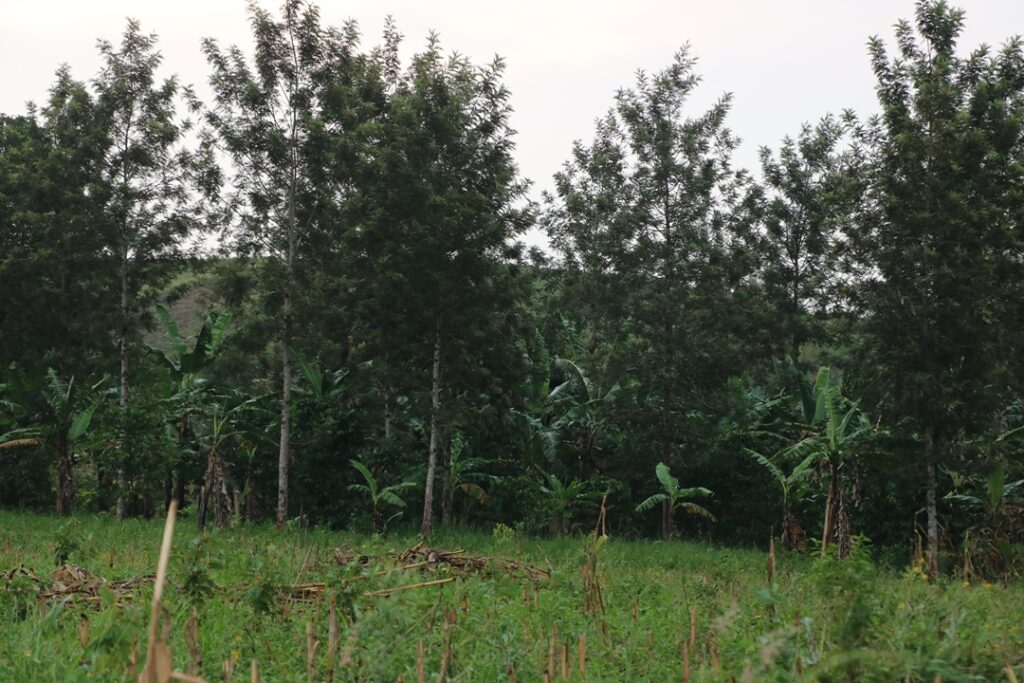
As the EU’s deforestation regulation forces commodity supply chains worldwide to prove their forest credentials, and as carbon markets put a price on standing restored forests, Kibale Forest National Park’s community smallholder farmers trained, organised and increasingly documented are better positioned than most to meet that bar.
The forest that once competed with them for land and resources is, slowly, becoming their most valuable asset.

Great piece 👏🏾👍🏾
Thank you for appreciating and taking time to read Micheal