
As National Environment Management Authority (NEMA) backs tree-planting drives and continues restoration work on the River Rwizi, a scene on the Mbarara road raises a question that awareness campaigns must answer: what should farmers do with their land?
“On my way to Mbarara, after the turn towards Rusheere, I passed a very large fenced-off farm. What stopped me was not the fence but what was inside it: open, bare land with dry grass, which the cattle were trying to feed on. The cows looked to be in declining condition. It was hard to watch,” recalled Wilbert Ikilai, Assistant Commissioner for Environment Education and Advocacy at the National Environment Management Authority (NEMA).
We will never know who owned that farm but certainly, dry spells, land degradation and other factors are the reasons behind this common sight along the cattle corridor and on many farms, including around fish ponds.
As we settle into October after a busy September, the question is how we can heal the land that feeds us. That question sits at the centre of two recent NEMA efforts.
Two projects, an answer to one question
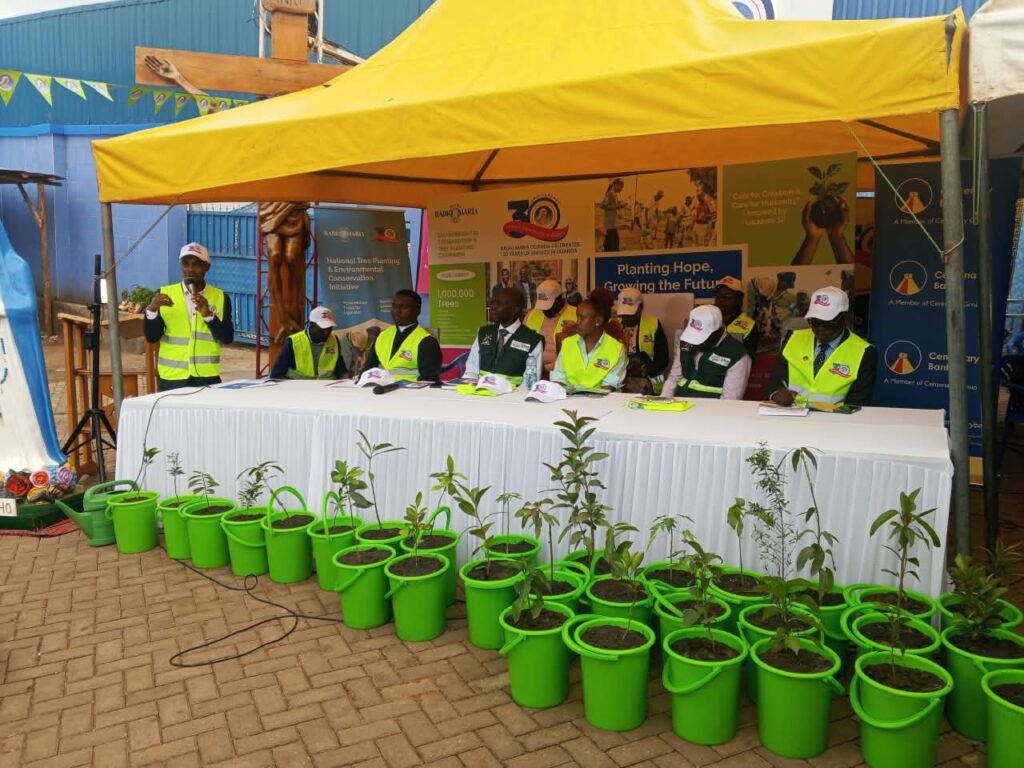
On 23rd September 2026, NEMA welcomed Radio Maria Uganda’s commitment to plant one million trees. The campaign was launched at Radio Maria’s grounds in Mutungo, Kampala, under the theme “Promoting Tree Ownership and Environmental Responsibility.” Wilbert Ikilai, NEMA’s Assistant Commissioner for Environment Education and Advocacy, attended the launch on behalf of the Executive Director. The drive is part of Radio Maria’s 30th anniversary celebrations and aims to mobilise individuals, communities and institutions to plant, own and nurture trees.
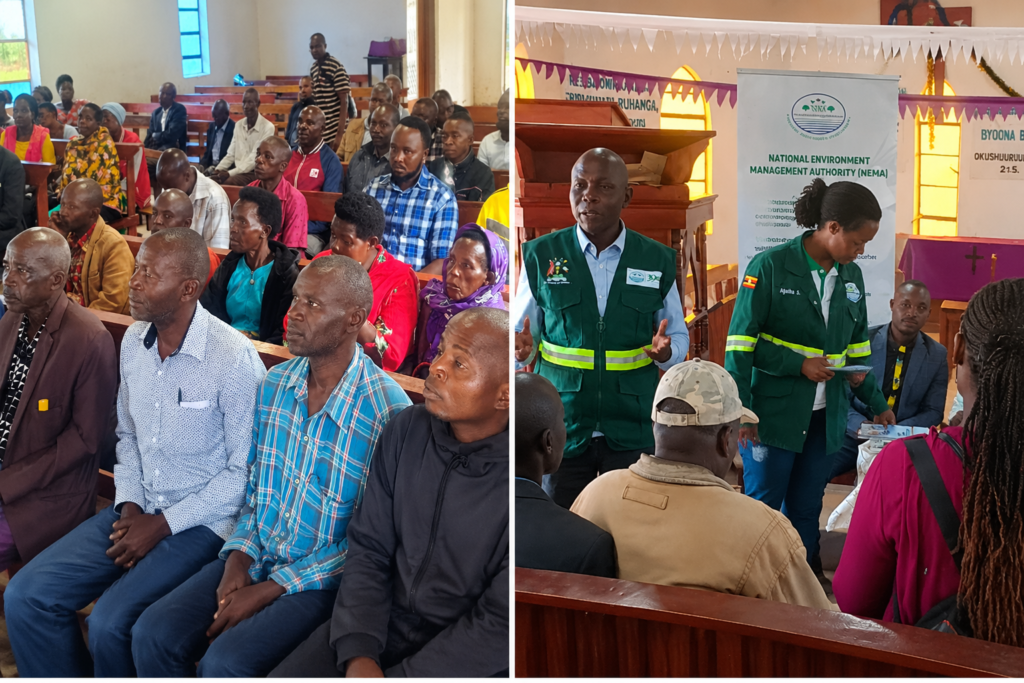
Meanwhile, the restoration of the River Rwizi in Mbarara continues. The project is in its awareness phase, when communities are still learning what is being done and why, and what it means for them.
Both efforts share a premise: restoring the environment depends on what ordinary people do with their land.
Why bare land matters to a river
Land stripped of cover holds water poorly. When rain comes, it runs off, carrying soil into streams and rivers. Over time, that silts the river, weakens its flow and makes water harder and costlier to supply. This is why restoring a river takes more than work on its banks. It involves the hills, pastures and farms across the whole catchment.
It matters to the farmer too. Pasture that has thinned to dry grass feeds animals badly, and the farm loses value. The health of the land and the health of the farm are the same problem.
The questions farmers are asking
Telling people to plant trees and protect riverbanks is necessary. But a farmer looking at dry pasture asks something more practical: what do I do with my animals and my land? Awareness has to answer that. Among the questions I hope the project addresses:
- How do I know whether my land is near a river or wetland, and how do I check it officially?
- How close to the water can I graze or farm?
- What are the alternatives, such as managing grazing, growing fodder, harvesting water or planting trees on pasture?
- Do I need a permit or environmental approval for my project?
- Who do I ask for help, and what support exists?
With interviews from the experts, these are the questions Green Harvest Journal will pursue as we move into October.
