

Soil is not just dirt beneath our feet — it is the living manuscript of agriculture, a silent storyteller of fertility and resilience. Every handful carries hidden tales of nutrients, acidity, and organic matter that decide whether a seed will falter or flourish.
In an era of climate uncertainty and rising input costs, farming by guesswork is no longer enough. Soil testing has become the farmer’s compass, a tool that reveals the land’s true needs, guiding choices that save money, protect ecosystems, and unlock higher yields.

Asiku Erick Amule, an Agricultural Extension Officer, frames it simply and bluntly as the difference between farming in the dark and farming with insight.
“Soil testing is very important because it helps farmers understand the nutrient status and condition of their soils before planting their crops. This promotes sustainable farming by helping farmers maintain balanced soil fertility.”
Here is Why Soil Testing is Your Shortcut to Better Harvests
Soil testing is more than a routine check; it’s the farmer’s shortcut to smarter decisions and stronger yields. By uncovering the nutrient status and condition of the soil before planting, farmers gain a clear picture of what their land truly needs.
With this knowledge, they can spot deficiencies in nitrogen, phosphorus, potassium, zinc, or organic matter, and apply the right type and amount of fertilizer instead of relying on guesswork. Even more importantly, soil testing guides farmers in choosing the most suitable crops for each field, ensuring optimum yield.
Think of it as a magic wand for productivity: balanced nutrition leads to better germination, stronger growth, higher yields, and improved crop quality. At the same time, farmers cut down on unnecessary fertilizer costs and protect the environment from chemical overuse. In short, soil testing transforms uncertainty into insight — and insight into abundance.
How to Actually Test Your Soil
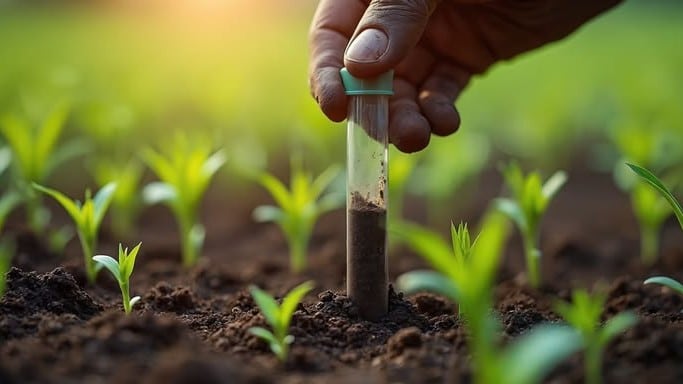
The process begins with proper soil sampling in the field. Farmers or the technicians collect soil from different spots within the selected field using the soil auger or a hoe, usually at a depth of 0–20 cm for most crops. The samples are mixed thoroughly to form a representative composite sample for the whole selected field.
The soil is then packed, labelled and taken to the laboratory. In the lab, the soil is dried, sieved and analysed using scientific equipment to determine pH, nutrient levels, organic matter, texture and other soil properties.
After analysis, a soil test report is prepared by the person who carried out the analysis with recommendations on fertilizer application, liming, organic manure use and crop suitability. Farmers are then advised on the best soil management practices for improved productivity.
Guess What? Your Soil’s Starving
Ugandan soils often reveal the same recurring problems: shortages of nitrogen, phosphorus, potassium, and organic matter. Acidity adds another layer of challenge, locking away nutrients and reducing fertilizer efficiency. Farmers are fighting back with practical fixes — applying biochar and soil amendments such as ash to restore balance.
Nitrogen shortages show up as yellowing leaves and stunted growth. A lack of phosphorus weakens root systems and delays crop maturity. Low potassium leaves crops vulnerable, stripping away their resistance to drought and disease.
Unchecked, these deficiencies slash yields, lower food quality, and erode farmer incomes. Corrected, they unlock healthier soils, stronger crops, and more resilient livelihoods.
Stop Farming Blind — Your Soil’s Screaming for a Test
Farmer awareness of soil testing remains relatively low, especially among smallholder farmers in rural areas. Many continue to rely on traditional methods, applying fertilizers without knowing the actual needs of their soils.
The barriers are clear: limited access to testing laboratories, high costs, and weak awareness campaigns. Some farmers also expect instant results and may not fully grasp the long‑term benefits of soil testing.
To close this gap, there is a pressing need for stronger farmer education, subsidized services, and mobile soil testing programs. These efforts would make soil testing more accessible, increase adoption, and empower farmers to manage their land with knowledge rather than guesswork.
Government Policies: Stepping In to Support Soil Testing
The government, through the Ministry of Agriculture, Animal Industry and Fisheries (MAAIF), together with research institutions such as the National Agricultural Research Organisation (NARO), is actively supporting soil testing initiatives. These efforts include extension programs, research projects, and broader agricultural modernization strategies.
Some of these programs promote sustainable land management, smarter fertilizer use, and climate‑smart agriculture. Yet the reach remains limited: many farmers in remote areas still lack access to testing services. To make these policies truly effective, there is a need to strengthen extension systems, increase funding for soil laboratories, and decentralize testing services so that support reaches farmers where it matters most — in the field.
In 2024, Busitema University’s Arapai campus in Soroti District launched the Uganda Soil Institute on World Soil Day. Designed as a semi‑autonomous center of excellence for soil research, testing, and innovation, the institute provides soil testing services to farmers, offers training, advocacy, and policy formulation and serves as a hub for soil‑related technologies and sustainable management practices.
The Uganda Soil Institute is also expected to be a long‑term game‑changer, decentralizing soil testing and making it more accessible to farmers.
Innovation in Soil Testing: Rewriting the Farmer’s Playbook
Soil testing is no longer just a slow laboratory routine. It’s evolving into a dynamic, tech‑driven process that puts power directly in the farmer’s hands.
- Portable kits and digital sensors now allow quick field analysis, delivering instant readings without the wait for lab results.
- GPS and GIS technologies are mapping soil fertility across entire regions, helping farmers see the bigger picture of their land.
- Mobile apps and digital platforms bring recommendations straight to farmers’ phones, turning complex data into simple, actionable advice.
- Drones and remote sensing are pushing precision agriculture forward, monitoring soil and crop conditions from above with unmatched accuracy.
Together, these innovations transform soil testing from a technical chore into a real‑time decision‑making tool. Farmers gain immediate insights, cut costs, and adopt climate‑smart practices that protect both productivity and the environment.
Bad Soil = Bad Future: Soil Health and Sustainability
Healthy soils are the foundation of sustainable agriculture. Balanced fertility not only nourishes crops but also protects the living ecosystem beneath our feet.
It is therefore crucial to note that soil testing promotes sustainable farming by helping farmers maintain balanced soil fertility. Instead of overusing fertilizers, farmers apply nutrients according to soil requirements, which protects soil microorganisms and prevents degradation.
It also encourages the use of organic manure, crop rotation, cover cropping, and liming where necessary. Maintaining healthy soils improves water retention, reduces erosion, and supports long-term agricultural productivity.
Healthy soils are the foundation of sustainable food production and environmental conservation.
Climate Change Impact on Soil
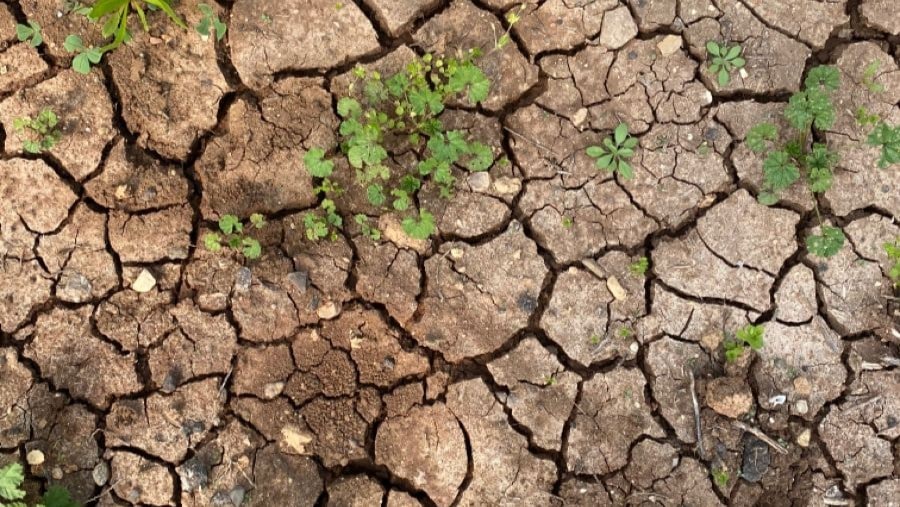
Climate change is steadily eroding the foundation of agriculture. Rising temperatures, unpredictable rainfall, flooding, drought, nutrient leaching, and the loss of organic matter are all undermining soil fertility. Productivity in many farming areas is declining as soils struggle to cope with these stresses.
With the realities we face today, soil testing has become indispensable. It equips farmers to adapt by tracking changes in soil conditions and guiding smarter management practices. Testing enables the precise application of fertilizers, restoration of organic matter, adoption of climate‑smart farming methods, and selection of crops that can thrive under shifting conditions.
In short, soil testing is no longer optional. It is the farmer’s frontline defense against climate uncertainty, ensuring resilience and sustainability in the face of a changing world.
All in All, So What?
Ignore your soil, and watch your crop yields collapse. Soil testing is the farmer’s shortcut to resilience, productivity, and sustainability. It’s not a luxury, it’s survival.
Too many farmers still hustle through the trial‑and‑error method: beans this season, maize the next, then cabbages or coffee — each crop tested blindly against soil that may not support it. Season after season, money, time, and effort are gambled away, while yields remain disappointing.
Soil testing ends that cycle. With proper data, farmers know exactly what their land can support, which nutrients are missing, and which crops will thrive. Instead of gambling with seasons, they invest with insight.
In the age of climate uncertainty and rising costs, soil testing is not just about better harvests — it’s about protecting livelihoods, securing food systems, and ensuring that every seed sown has a fighting chance.
The bottom line: stop farming blind. Test your soil, and farm with foresight.
