
At the Aquaculture Research and Development Centre (ARDC) Kajjansi, Denis Opio, a research officer in fish nutrition, is candid about the paradox at the heart of Uganda’s aquaculture industry: the dream of a “perfect feed” remains elusive. Farmers want pellets that are cheap, 100% digestible, and nutritionally complete. Scientists, however, are still balancing between affordability, digestibility, and sustainability.

In your experience, what is the best type of feed for tilapia, catfish, and Nile perch in Uganda?
For Nile tilapia and the African catfish, the best (or perfect) feed would be powdered feed for larvae, crumbles for juveniles or floating pellets for grower and adult fish that provide all nutrients (proteins, fats, carbohydrates, vitamins, and minerals) required by the fish in balanced proportions at their different development stages. The feed should be cheap, highly digestible and release minimal waste to the environment.
“A perfect feed should provide all nutrients in the right proportions and be fully digestible. If waste decomposes, it consumes oxygen and releases toxic compounds like ammonia.”
But the economics are unforgiving. Commercial feeds are expensive, while locally formulated feeds often lack balance. For Nile perch, the challenge is even greater: juveniles may accept artificial diets rich in animal protein, but adults are piscivorous, feeding only on other fish.
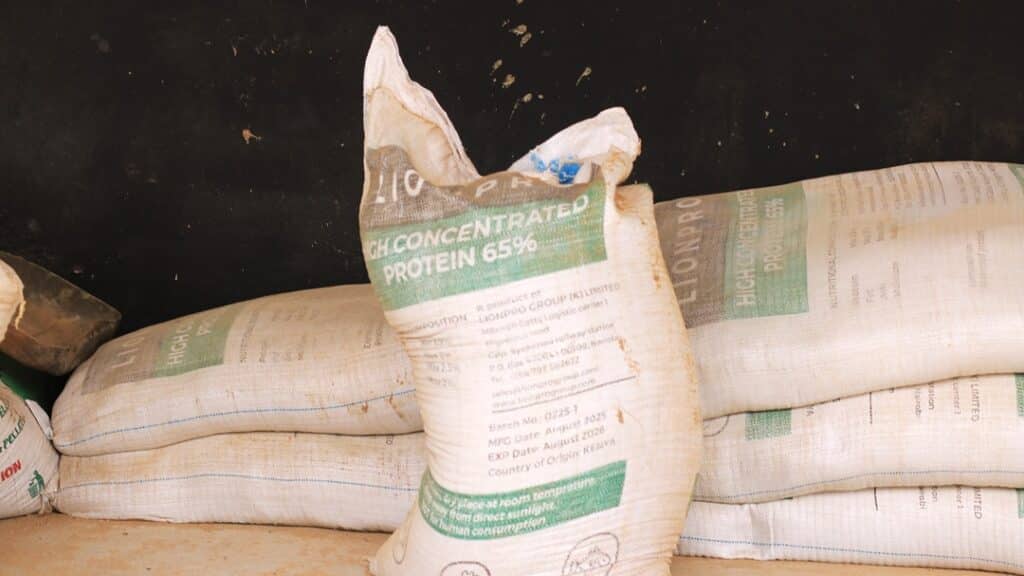
How should farmers decide between commercial pellets and locally formulated feeds?
Deciding on whether to choose between commercial pellets and locally formulated feeds is reliant on a number of factors;
- Cost considerations: Locally manufactured or home-made feeds are cheaper. But they may not be nutritionally complete. A Kilogram of fish feed pellets quoted at about at UGX 3,500–4,000 per kilogram, translating to under $1.10 USD per kg.
- Quality: Generally commercial feeds are better in quality (contain specialized additives e.g. enzymes, antioxidants, growth promotants, probiotics.
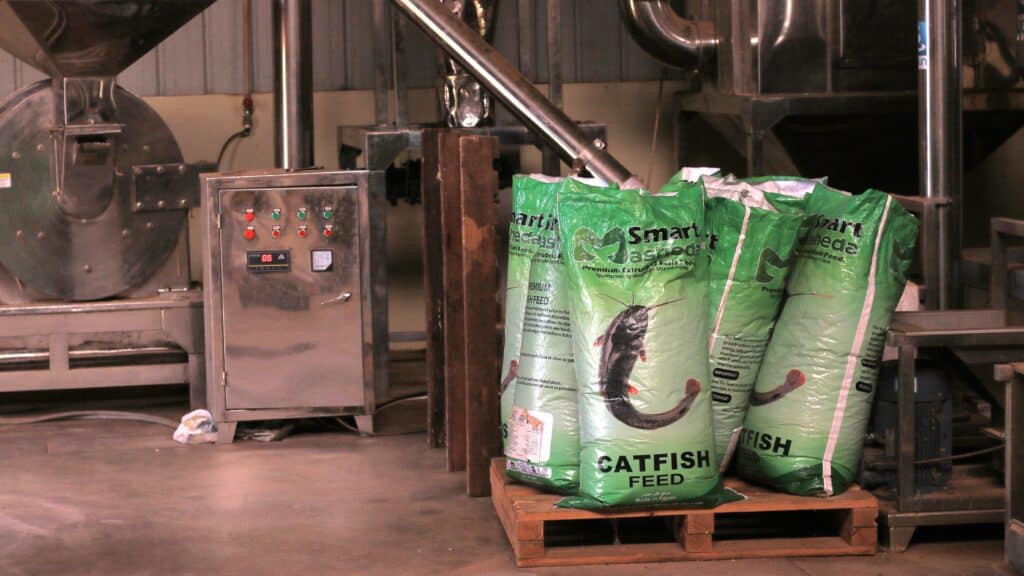
Locally made feeds normally do not float, whereas good commercial feeds float. Floating pellets are prized for their visual intake control, reduced waste, and improved digestibility. Farmers can observe feeding behavior, adjust rations, and avoid overfeeding. The extrusion process also sterilizes harmful pathogens.
- Production system: A semi-intensive tilapia farmer who fertilizes his ponds with dried cattle or poultry manure obtains live feed (zooplankton and phytoplankton) within the system, which comes with a lot of benefits. They provide essential amino acids, fatty acids and minerals, so the farm made feed only serves a supplementary purpose. Natural food is especially good for young fish (larvae and fry) that have not yet developed a functional digestive system.
Recommendations
Adopt a “hybrid feeding approach”; Provide floating feed for fingerlings because this allows you to monitor exactly how much they eat, preventing toxic buildup of uneaten feed in the water, which is fatal for young fish.
For grow-out and finisher fish, you can transition to high-quality sinking feed. Because they are bottom-to-mid water column foragers, they will consume sinking pellets rapidly, lowering overhead costs during the high-consumption phase.
Mixed Feeding; Some farmers safely mix about (15% floating feed with 85% sinking feed) to allow visual monitoring while keeping costs manageable.
What nutrients do fish require at different growth stages, and how do they affect productivity?
Fish require up to 40 nutrients categorised as macronutrients and micronutrients.
Macronutrients consist of proteins (which are made of amino acids). Fish require up to 10 essential amino acids such as lysine and methionine. Intensive systems like cages demand complete feeds, while semi-intensive ponds can rely on natural foods like zooplankton and phytoplankton stimulated by pond fertilization.
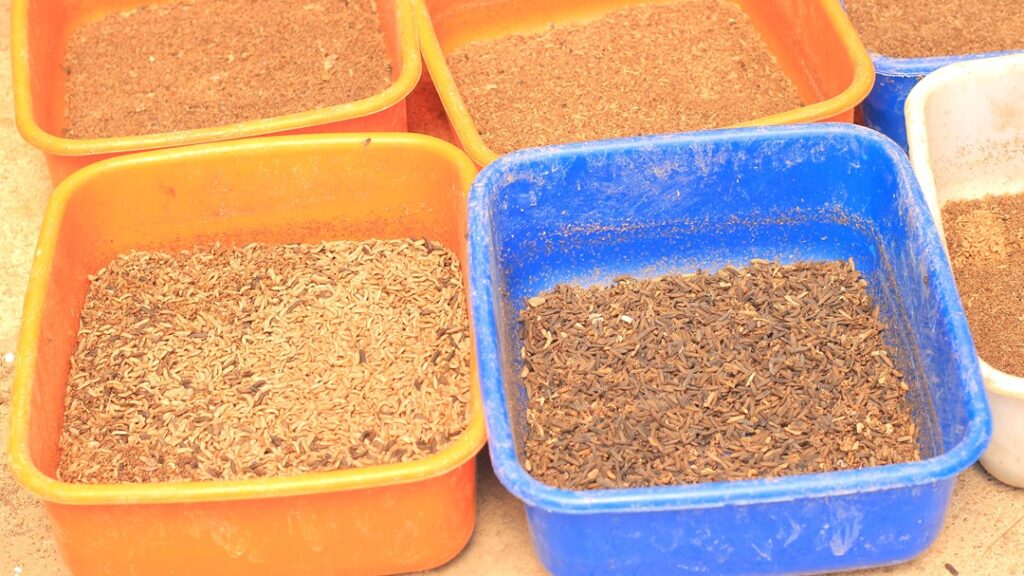
Protein remains the most expensive component. Mukene (silver cyprinid) with about 65% protein has become increasingly expensive and overfished in Uganda due to rising demand from both human consumption and its use in poultry and animal feed. This has forced researchers to explore alternatives like black soldier fly larvae which has about 50% – 55% protein content, earthworm meal, and concentrated plant proteins like soybean.
Other macronutrients lipids (fats) and carbohydrates, as energy sources, although fish derive most energy from lipids. Fish also require minerals like Calcium, Phosphorus and Potassium (referred to as macro-minerals) and others like zinc, selenium, iodine, iron, copper and cobalt (micro-minerals)
How are local ingredients being integrated with innovations to improve fish feed quality?
Uganda’s feed industry leans on local inputs: Mukene, Nkejje, blood meal, cottonseed meal, sunflower meal, maize, wheat bran, and soybean meal. But plant proteins carry anti-nutritional factors and lack balanced amino acids. To counter this, ARDC mixes animal and plant proteins, supplemented with synthetic amino acids like lysine and methionine.
Recent breakthroughs include:
- Protein concentrates combining vitamins and minerals, allowing farmers to mix with maize for complete feed.
- Floating feeds made with black soldier fly larvae using leavening agents, bypassing costly extruder machines.
- Indigenous live feed cultures like Moina, a substitute for imported Artemia shrimp.
Feed is often the biggest expense for farmers. How are you helping reduce costs?
Feed represents the single largest expense in aquaculture, accounting for 60–80% of variable production costs. Farmers face persistent challenges from fluctuating protein prices and limited access to credit facilities. Protein sources remain the most expensive feed ingredients, hence the ultimate overall driver of fish feed prices.
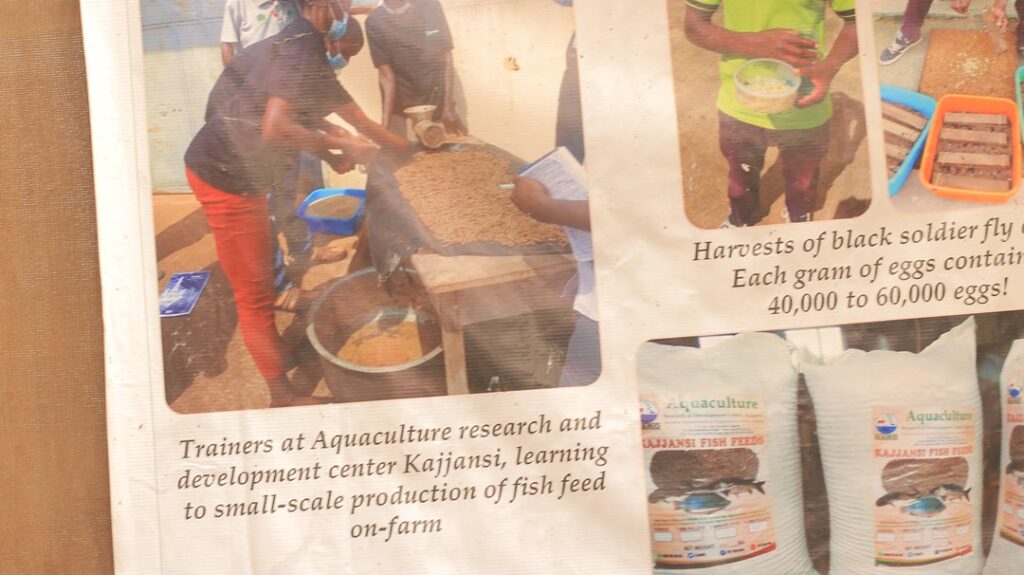
Younger fish, such as fingerlings, require more frequent feeding—up to four times a day—while older fish may only need two meals daily. In the case of tilapia, feeding guides recommend that very young fish consume up to 10% of their body weight per day. Since farmers feed entire populations rather than individual fish, they must calculate the average body weight, multiply by the number of fish, and determine the total biomass. Rations are then based on this biomass figure.
As tilapia grow, their feed requirements shift. A mature fish weighing 500–600 grams typically requires only 1–2% of its body weight in feed each day. This reduction in percentage does not mean the fish eats less overall—because the fish is larger, its absolute feed intake is greater.
To counter feed prices, our research now focuses on identifying alternative protein sources to fishmeal (e.g., insect (black soldier fly meal). We are also considering extracting and concentrating protein from seeds of fodder legumes or so called “orphaned legumes” like Lablab, Centrosema, Desmodium and Stylosanthes.
What role do government policy or private sector partnerships play in making quality feed more accessible?
The Animal Feeds Act, 2024, compels feed manufacturers to establish quality control laboratories to analyze and establish the nutritional quality of all animal feeds before sale.
The government, through the Uganda National Bureau of Standards working with ARDC Kajjansi has developed fish feed standards for Nile tilapia and African catfish at different development stages (e.g., fry, fingerlings, growers and finishers).
These standards define the quality of both the raw materials use to make feed and the parameters of the feeds themselves. Safety and labeling requirements are also well outlined in the national fish feed standards.
Private sector partnerships encourage innovation, capital investment, and distribution networks required to make quality animal/fish feed affordable and physically available across local agricultural markets.
How can fish feed production become more environmentally sustainable, and what role do alternative proteins play?
Sustainability is central to ARDC’s vision. Reducing reliance on wild-caught Mukene, recycling organic waste through insect protein, and integrating aquaponics or rice-fish culture are all part of the roadmap.
“We are moving towards concentrates, insect meal, single-cell proteins like algae and yeast, and functional feed additives that improve gut health.”
Where do you see fish feed technology in Uganda heading over the next decade?
Uganda’s fish feed industry has grown from sinking pellets to floating formulations in just a decade. The next ten years promise a shift toward alternative proteins and functional additives
A greater move towards the use of concentrates can be expected. Researchers are increasingly exploring alternative protein sources for fish feed.
Insect meal, particularly from the black soldier fly, is gaining popularity, though challenges remain. Its exoskeleton contains chitin, a compound that fish cannot digest efficiently, prompting further investigation into other options such as earthworm meal.
Plant-based proteins are also under study, with efforts focused on extracting and concentrating nutrients while removing anti‑nutritional factors. Priority is given to fodder legumes that do not
compete with human food supplies. Alongside these, functional feed additives are becoming moreimportant.
These additives modify the fish’s gut environment, encouraging the growth of beneficial bacteria that enhance digestion and nutrient absorption. Some additives are plant‑derived (phytogenics), while others are probiotics that serve as food for friendly gut microbes.
Enzymes are another innovation, particularly useful in improving the digestibility of plant proteins that fish struggle to break down. Growth promotants are also evolving: while antibiotics were once widely used, concerns about antimicrobial resistance have shifted attention toward non‑antibiotic alternatives such as probiotics and gut‑modifying compounds.
Together, these innovations aim to make fish feed safer, more efficient, and better aligned with sustainable aquaculture practices.
