


Information is power, but in coffee, it is survival. Every tree a farmer plants is a 20–30‑year gamble. Choose wrong, and you’re stuck with decades of regret.
Uganda’s Robusta, once the tough guy of the sector, is now cracking under climate pressure—longer droughts, hotter days, and varieties that cannot hack it. Arabica, the other half of Uganda’s coffee heart, is not faring much better.
Rising temperatures, erratic rainfall, pests like the coffee berry borer, and diseases like leaf rust are turning once‑reliable trees into liabilities. Meanwhile, the global market does not care about your struggles. Buyers want consistency, high cup quality, and sustainability.
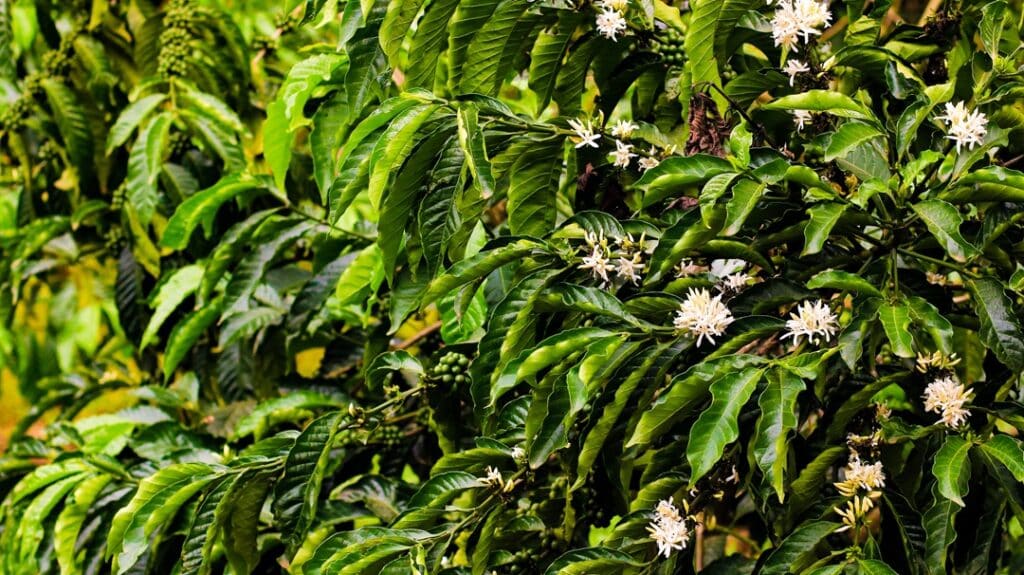
Long story short, farmers are squeezed between climate chaos and market ruthlessness, with zero margin for error.
That is why we bring to you a catalogue of the ‘Top 10 Arabica varieties for Uganda in 2026’. This is not just another list. It’s a survival guide curated to meet today’s brutal realities: climate resilience, disease resistance, and market relevance. Some are divas—exceptional flavour, fragile health. Others are workhorses—high yield, tough as nails, but less glamorous. Together, they represent the choices farmers must make to secure livelihoods and keep Uganda’s coffee on the global stage.
N.B Copyright © World Coffee Research, 2025. Most of the agronomic data in this catalogue was procured from World Coffee Research, whose global work continues to guide farmers toward resilience and sustainability.
1. SL28 – the diva of altitude
This is the variety everyone loves to sip but hates to grow. Exceptional flavour, adored by international buyers, but fragile as glass when disease shows up.
Agronomic Data:
- STATURE: Tall
- LEAF TIP COLOR: Green
- BEAN SIZE: LargeYIELD POTENTIAL: LowOPTIMAL ALTITUDE: Medium, High
- QUALITY POTENTIAL AT HIGH ALTITUDE: Exceptional
- DISEASE RESISTANCE: Susceptible to Coffee Leaf Rust, Nematode, Coffee Berry Disease
- YEAR OF FIRST PRODUCTION: Year 3
- NUTRITION REQUIREMENT: Low
- RIPENING OF FRUIT: Unknown
- CHERRY TO GREEN BEAN OUTTURN: High
- PLANTING DENSITY: 1000–2000 plants/ha (single‑stem pruning)
- GENETIC DESCRIPTION: Bourbon‑Typica group (Bourbon related)
- 2. SL34 – same diva, less drama
Think of SL34 as SL28’s sibling: still classy, still fragile, but with slightly better yield and balance.
Agronomic Data:
- STATURE: Tall
- LEAF TIP COLOR: Dark Bronze
- BEAN SIZE: Large
- YIELD POTENTIAL: Medium
- OPTIMAL ALTITUDE: Medium, High
- QUALITY POTENTIAL AT HIGH ALTITUDE: Exceptional
- DISEASE RESISTANCE: Susceptible to Coffee Leaf Rust, Nematode, Coffee Berry Disease
- YEAR OF FIRST PRODUCTION: Year 3
- NUTRITION REQUIREMENT: Medium
- RIPENING OF FRUIT: Unknown
- CHERRY TO GREEN BEAN OUTTURN: High
- PLANTING DENSITY: 1000–2000 plants/ha (single‑stem pruning)
- GENETIC DESCRIPTION: Bourbon‑Typica group (Typica related)
- 3. Batian – the resilient rebel
Kenya’s modern fighter. Built for resilience, high yield, and decent cup quality. Not a diva, but a dependable partner.
Agronomic Data:
- STATURE: Tall
- LEAF TIP COLOR: Green or Bronze
- BEAN SIZE: Very Large
- YIELD POTENTIAL: High
- OPTIMAL ALTITUDE: Low
- QUALITY POTENTIAL AT HIGH ALTITUDE: Very Good
- DISEASE RESISTANCE: Susceptible to Coffee Leaf Rust, Nematode; Highly resistant to Coffee Berry Disease
- YEAR OF FIRST PRODUCTION: Year 2
- NUTRITION REQUIREMENT: Medium
- RIPENING OF FRUIT: Unknown
- CHERRY TO GREEN BEAN OUTTURN: High
- PLANTING DENSITY: 2000–3000 plants/ha (multi‑stem pruning)
- GENETIC DESCRIPTION: Introgressed hybrid (Timor Hybrid crosses)
- 4. Ruiru 11 – the compact workhorse
Uganda’s friend for small farms. Compact, high‑yielding, disease‑resistant, and quick to produce.
Agronomic Data:
- STATURE: Dwarf/Compact
- LEAF TIP COLOR: Green or Bronze
- BEAN SIZE: Large
- YIELD POTENTIAL: Very High
- OPTIMAL ALTITUDE: Low, Medium, High
- QUALITY POTENTIAL AT HIGH ALTITUDE: Low–High
- DISEASE RESISTANCE: Highly resistant to Coffee Leaf Rust, Resistant to Coffee Berry Disease, Susceptible to Nematode
- YEAR OF FIRST PRODUCTION: Year 2
- NUTRITION REQUIREMENT: High
- RIPENING OF FRUIT: Average
- CHERRY TO GREEN BEAN OUTTURN: Average
- PLANTING DENSITY: 2000–3000 plants/ha (multi‑stem pruning)
- GENETIC DESCRIPTION: F1 hybrid (introgressed)
- 5. K7 – the drought survivor
Not flashy, but steady. Handles Uganda’s unpredictable rainfall zones with grit.
Agronomic Data:
- STATURE: Tall
- LEAF TIP COLOR: Light Bronze
- BEAN SIZE: Large
- YIELD POTENTIAL: Medium
- OPTIMAL ALTITUDE: Low, Medium
- QUALITY POTENTIAL AT HIGH ALTITUDE: Good
- DISEASE RESISTANCE: Susceptible to Coffee Leaf Rust, Nematode; Tolerant to Coffee Berry Disease
- YEAR OF FIRST PRODUCTION: Year 3
- NUTRITION REQUIREMENT: Medium
- RIPENING OF FRUIT: Unknown
- CHERRY TO GREEN BEAN OUTTURN: High
- PLANTING DENSITY: 1000–2000 plants/ha (single‑stem pruning)
- GENETIC DESCRIPTION: Bourbon‑Typica group (Bourbon related)
- 6. Catimor 129 – the tough guy
Compact, high‑yield, disease‑resistant. Cup quality is decent, but resilience is the real selling point.
Agronomic Data:
- STATURE: Dwarf/Compact
- LEAF TIP COLOR: Green
- BEAN SIZE: Large
- YIELD POTENTIAL: High
- OPTIMAL ALTITUDE: High
- QUALITY POTENTIAL AT HIGH ALTITUDE: Good
- DISEASE RESISTANCE: Intermediate resistance to Coffee Leaf Rust, Resistant to Coffee Berry Disease, Susceptible to Nematode
- YEAR OF FIRST PRODUCTION: Year 2
- NUTRITION REQUIREMENT: High
- RIPENING OF FRUIT: Average
- CHERRY TO GREEN BEAN OUTTURN: Average
- PLANTING DENSITY: 3000–4000 plants/ha (single‑stem pruning)
- GENETIC DESCRIPTION: Introgressed (Catimor related)
- 7. Pacamara – the show‑off
Huge beans, exotic flavour, specialty buyers love it. Farmers, not so much—it’s fragile and low‑yield.
Agronomic Data:
- STATURE: Dwarf/Compact
- LEAF TIP COLOR: Green or Bronze
- BEAN SIZE: Very Large
- YIELD POTENTIAL: Low
- OPTIMAL ALTITUDE: High
- QUALITY POTENTIAL AT HIGH ALTITUDE: Exceptional
- DISEASE RESISTANCE: Susceptible to Coffee Leaf Rust, Nematode, Coffee Berry Disease
- YEAR OF FIRST PRODUCTION: Year 3
- NUTRITION REQUIREMENT: Medium
- RIPENING OF FRUIT: Average
- CHERRY TO GREEN BEAN OUTTURN: Average
- PLANTING DENSITY: 5000–6000 plants/ha (single‑stem pruning)
- GENETIC DESCRIPTION: Bourbon‑Typica group (Typica & Bourbon related)
- 8. Geisha (Panama) – the celebrity
World‑famous, award‑winning, and breathtaking in the cup. But fragile, low‑yield, and demanding altitude.
Agronomic Data:
- STATURE: Tall
- LEAF TIP COLOR: Green or Bronze
- BEAN SIZE: Average
- YIELD POTENTIAL: Low
- OPTIMAL ALTITUDE: High (>1600m)
- QUALITY POTENTIAL AT HIGH ALTITUDE: Exceptional
- DISEASE RESISTANCE: Intermediate resistance to Coffee Leaf Rust; Susceptible to Nematode & Coffee Berry Disease
- YEAR OF FIRST PRODUCTION: Year 4
- NUTRITION REQUIREMENT: Medium
- RIPENING OF FRUIT: Average
- CHERRY TO GREEN BEAN OUTTURN: Average
- PLANTING DENSITY: 3000–4000 plants/ha (single‑stem pruning)
- GENETIC DESCRIPTION: Ethiopian landrace
- 9. Dega – Ethiopia’s gift
Floral, fruity, complex. Perfect for Uganda’s highlands. More resilient than Geisha, but still needs care.
Agronomic Data:
- STATURE: Tall
- LEAF TIP COLOR: Green to Light Bronze
- BEAN SIZE: Medium
- YIELD POTENTIAL: Medium
- OPTIMAL ALTITUDE: High
- DISEASE RESISTANCE: Tolerant to Coffee Leaf Rust; Susceptible to Coffee Berry Disease
- YEAR OF FIRST PRODUCTION: Year 3–4
- NUTRITION REQUIREMENT: Medium
- RIPENING OF FRUIT: Average
- CHERRY TO GREEN BEAN OUTTURN: Medium
- PLANTING DENSITY: 3000–4000 plants/ha (single‑stem pruning)
- GENETIC DESCRIPTION: Ethiopian landrace Arabica
10. Centroamericano – the future‑proof hybrid
High yield, disease‑resistant, and built for agroforestry. Farmers who invest in clones, not seeds, will reap the rewards.
Agronomic Data:
- STATURE: Dwarf/Compact
- LEAF TIP COLOR: Green
- BEAN SIZE: Large
- YIELD POTENTIAL: Very High
- OPTIMAL ALTITUDE: Low, Medium, High (>1300m)
- QUALITY POTENTIAL AT HIGH ALTITUDE: Very Good
- DISEASE RESISTANCE: Highly resistant to Coffee Leaf Rust, Susceptible to Nematode & Tolerant to Coffee Berry Disease
- YEAR OF FIRST PRODUCTION: Year 2
- NUTRITION REQUIREMENT: Very High
- RIPENING OF FRUIT: Average
- CHERRY TO GREEN BEAN OUTTURN: Very High
- PLANTING DENSITY: 3000-4000 plants/ha (using single-stem pruning)
- GENETIC DESCRIPTION: F1 hybrid (introgressed)
Final Truth Shot of Espresso
Uganda’s Arabica future isn’t about nostalgia—it’s about survival. SL28 and Geisha may win awards, but Batian, Ruiru 11, and Centroamericano are the ones that will keep farmers afloat when climate chaos hits harder.
The choice is brutal but clear: plant for resilience and pray the market pays for your gamble.
