
When we talk agriculture, forget the boring checklist of crops, cows, and agribusiness jargon. We are talking innovation, impact, and sustainability—the kind that flips the script on what farming looks like in Uganda.
Jesca Nayebare’s venture, FarmPlus Agrovets Uganda, is all three rolled into one.
Struggle Forged, Spark Ignited
Nayebare’s story begins in a single-mother household where livestock farming was not a side hustle — it was survival. But survival came at a cost. The same small plot of land had to feed both the family and the animals. Spoiler: it didn’t work.
Her mother eventually abandoned livestock farming because buying feed was bleeding the family dry. That decision wrecked their income and Nayebare’s education. She dropped out after Senior Four in 2021, post-COVID, with no job prospects and no safety net.
Most people would have folded. Nayebare did not.
The Turning Point
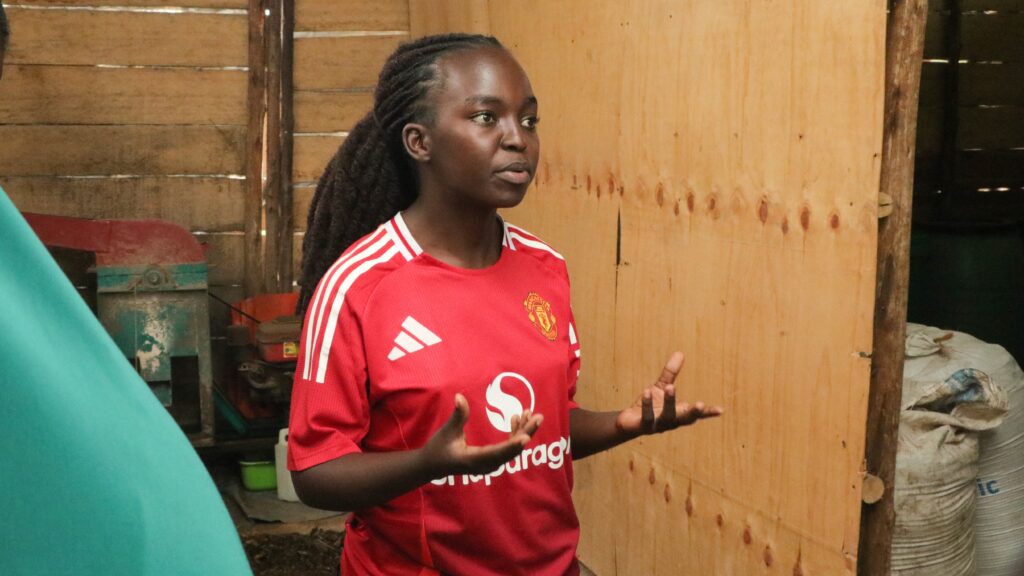
Opportunity knocked in the form of the Social Innovation Academy (SINA), a self-governed community that helps marginalized youth build social enterprises. Nayebare grabbed it with both hands.
Instead of wallowing in “poor me,” she asked: What if I could fix the livestock feed paradox that broke my family?
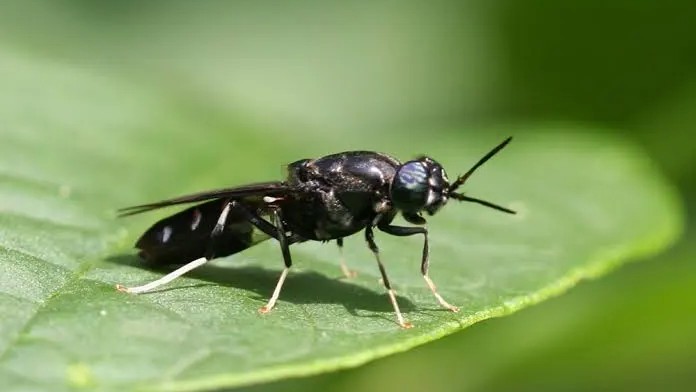
Her answer: Black Soldier Fly (BSF) farming.
This isn’t just Nayebare’s idea. Globally, institutions are backing BSF farming:
- FAO Kenya reports that small-scale farmers in Siaya are profiting from BSF feeds, which are cheaper than soybean and fishmeal FAO Kenya.
- Scientific reviews (2018–2024) highlight insects as sustainable protein sources, requiring less land, emitting fewer greenhouse gases, and fitting naturally into animal diets (Schiavone et al., van Huis & Oonincx, Sogari et al., Makkar).
- UNEP & BUGS+ Alliance (2024–2025) emphasize BSF waste processing as a circular economy solution, transforming organic waste into high-value feed and soil amendments BUGS Implementation Report Uganda.
The Fly Revolution
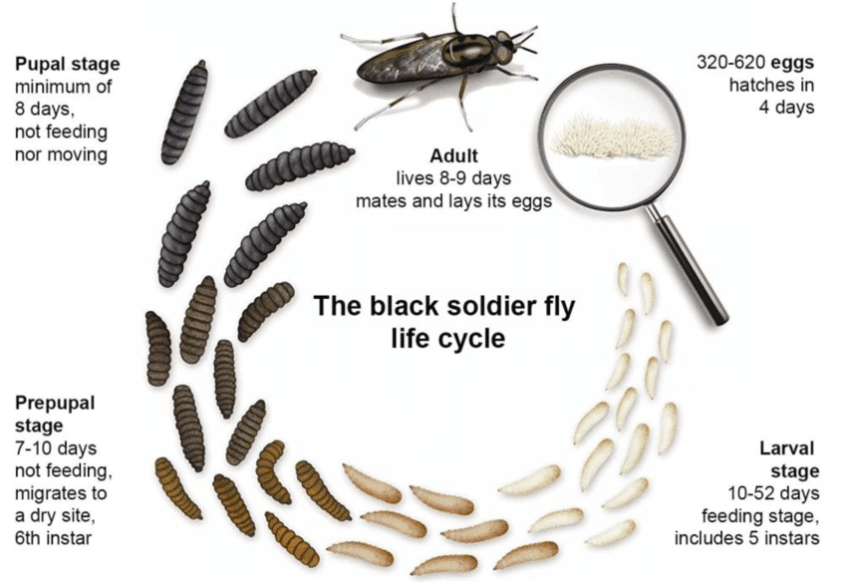
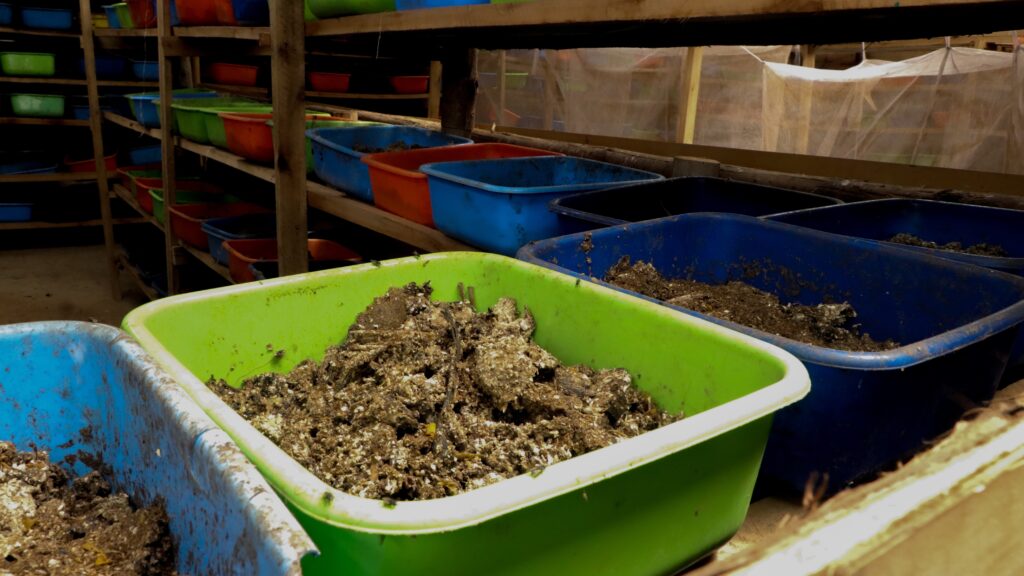
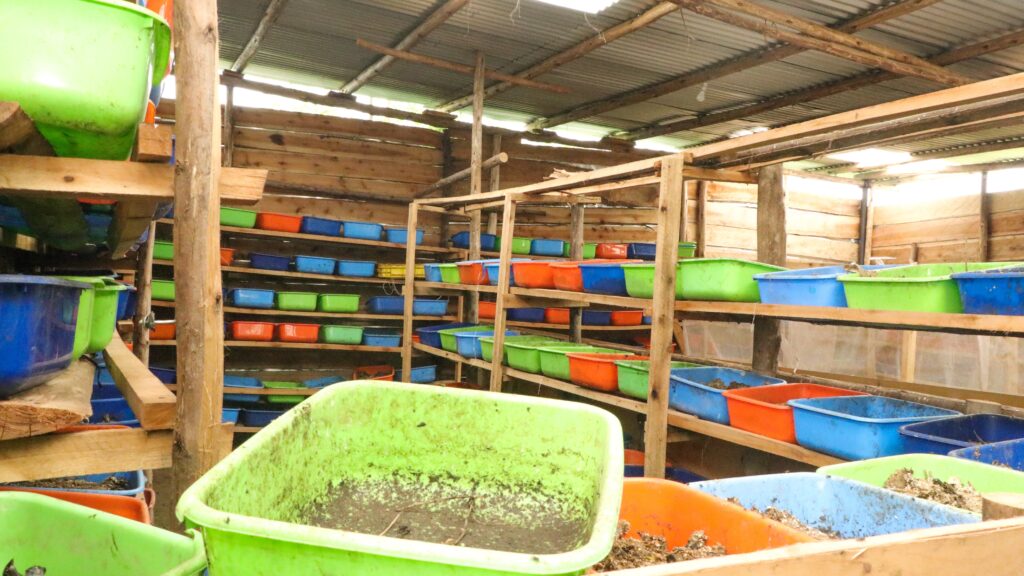
Here’s how FarmPlus works:
- Collect organic food waste from schools, supermarkets, and food processors.
- Ferment it for a week.
- Feed it to black soldier fly eggs.
- Watch them morph into maggots.
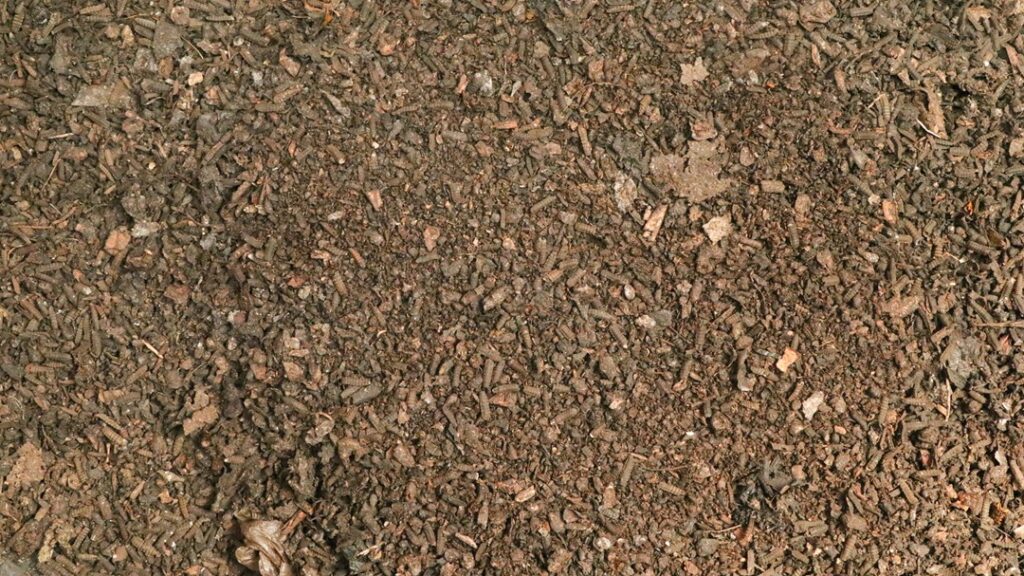
- Harvest, dry, crush — and boom: protein-packed livestock feed.
The residue? Dried and sold as organic fertilizer. Waste turned into wealth.
You must wonder- why black soldier flies, not the regular house flies buzzing around your kitchen? Because they are controllable, eco-friendly, and protein powerhouses. Unlike house flies that thrive on human waste and spread disease, black soldier flies feed on clean organic waste, do not harm humans, and deliver safe, high-quality protein for livestock.
Why BSF Stands Out
Globally, BSF farming is recognized as a sustainable alternative to conventional protein sources like soybean and fishmeal:
- Nutritional parity: BSF protein matches or exceeds soybean meal in amino acid balance. Studies show BSF larvae contain 40–55% crude protein, comparable to soybean meal (44–48%) and approaching fishmeal (60–72%) Wageningen University Review (wageningenacademic.com in Bing).
- Environmental edge: BSF farming requires less land and water, and reduces greenhouse gas emissions compared to soybean cultivation or fishmeal production. UNEP and the BUGS+ Alliance highlight BSF waste processing as a circular economy solution, transforming organic waste into high-value feed and soil amendments BUGS Implementation Report Uganda.
- Economic advantage: BSF feed is cheaper for smallholder farmers, making livestock production more viable. FAO Kenya reports that small-scale farmers in Siaya are profiting from BSF feeds, which are more affordable than soybean and fishmeal FAO Kenya.
Real Impact, Real Numbers
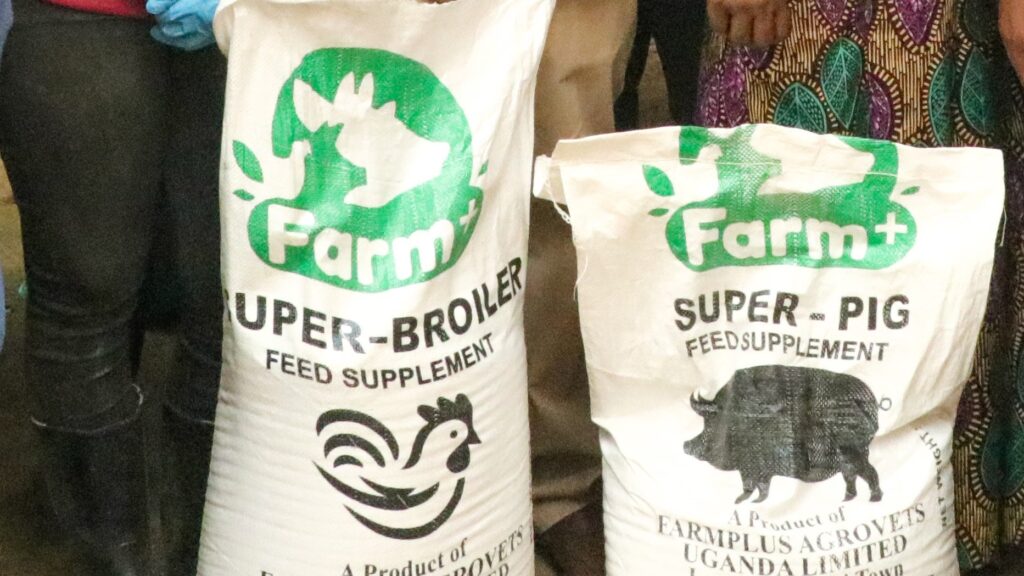
FarmPlus is not just quirky insect farming. It is cutting feed costs for farmers by over 30%. More than 1,500 farmers swear by it — pigs fatten faster, poultry thrive, and animals look lively instead of half-dead.
So far:
- 7 tonnes of piggery feed sold
- 3 tonnes of poultry feed
- 10 tonnes of manure
- 30+ farmers trained (mostly single mothers and youth)
And Nayebare is not stopping — fish, goats, and cattle are next.
Challenges on the Road
Of course, no revolution comes without roadblocks. Nayebare’s journey has been marked by challenges that would scare off the faint-hearted:
- Scalability: Demand is higher than supply. Farmers love the product, but limited space and lack of funding mean FarmPlus cannot yet meet big orders.
- Perception: Some farmers balk at the idea of feeding maggots to their animals. Nayebare has invested heavily in awareness campaigns, showing farmers the science and the results. Slowly, perceptions are shifting.
- Certification: Without official quality certification, FarmPlus is locked out of certain markets. Achieving certification requires funds, equipment, and upgraded facilities — hurdles Nayebare is determined to clear.
Despite these challenges, Nayebare’s persistence is paying off. Farmers who have tried the product become her best marketers, spreading the word and referring others.
The Business Side
FarmPlus products are priced to be affordable yet impactful:
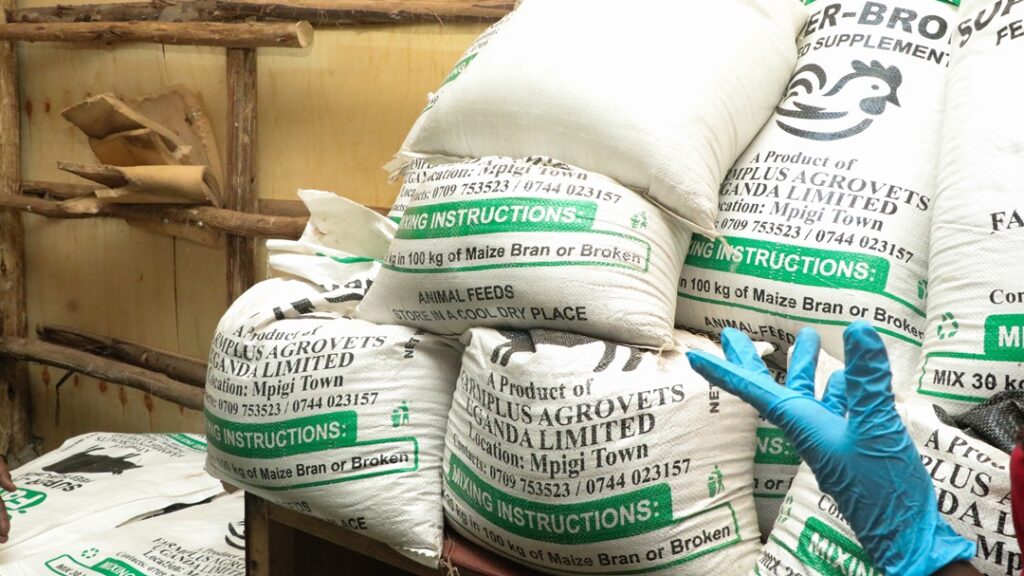
- Pig feed supplement: USD 1.10 (UGX 4,000) per kilogram
- Poultry feed supplement: USD 1.10 (UGX 4,000) per kilogram
- Organic manure: USD 0.26 (UGX 1,000) per kilogram
For farmers, these prices mean savings of up to 30% compared to conventional feeds, while boosting productivity and animal health.
Why This Story Hits Different
Jesca Nayebare is not just farming flies. She is farming possibility. She’s living proof that innovation can hatch anywhere — yes, even from maggots in Uganda.
FarmPlus is about more than feed. It is about rewriting the narrative: turning waste into opportunity, turning loss into leadership, and showing that sustainability is not a buzzword — it is survival.
Bottom Line
Nayebare’s venture is different because it is not just about agriculture. It is about agency. It is about refusing to stay a victim. It is about building a future where farmers save money, families thrive, and the environment breathes easier. And beyond that, it is about innovation that solves community problems — turning waste into wealth, turning stigma into opportunity, and turning overlooked resources into engines of change.

What a wonderful innovation.
Indeed. Very wonderful.